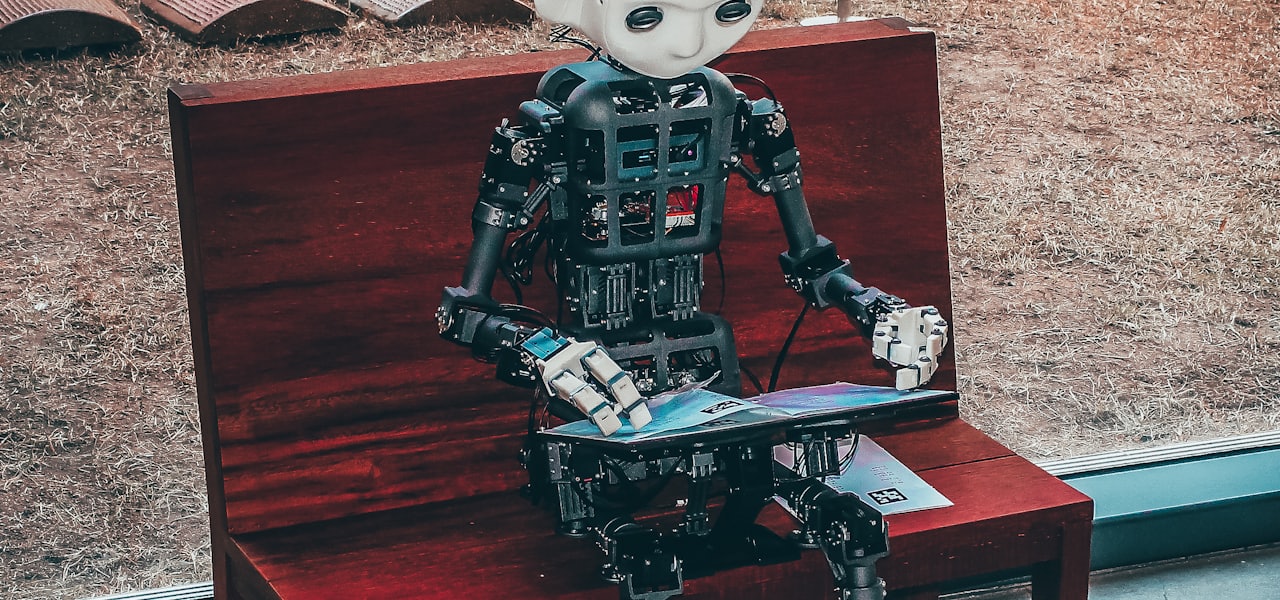
POP-11 is a reflective, incrementally compiled programming language with many of the features of an interpreted language. It is the core language of the Poplog programming environment developed originally by the University of Sussex, and recently in the School of Computer Science at the University of Birmingham, which hosts the main Poplog website. POP-11 is an evolution of the language POP-2, developed in Edinburgh University, and features an open stack model (like Forth, among others). It is mainly procedural, but supports declarative language constructs, including a pattern matcher, and is mostly used for research and teaching in artificial intelligence, although it has features sufficient for many other classes of problems. It is often used to introduce symbolic programming techniques to programmers of more conventional languages like Pascal, who find POP syntax more familiar than that of Lisp. One of POP-11's features is that it supports first-class functions. POP-11 is the core language of the Poplog system. The availability of the compiler and compiler subroutines at run-time (a requirement for incremental compiling) gives it the ability to support a far wider range of extensions (including run-time extensions, such as adding new data-types) than would be possible using only a macro facility. This made it possible for (optional) incremental compilers to be added for Prolog, Common Lisp and Standard ML, which could be added as required to support either mixed language development or development in the second language without using any POP-11 constructs. This made it possible for Poplog to be used by teachers, researchers, and developers who were interested in only one of the languages. The most successful product developed in POP-11 was the Clementine data mining system, developed by ISL. After SPSS bought ISL, they renamed Clementine to SPSS Modeler and decided to port it to C++ and Java, and eventually succeeded with great effort, and perhaps some loss of the flexibility provided by the use of an AI language. POP-11 was for a time available only as part of an expensive commercial package (Poplog), but since about 1999 it has been freely available as part of the open-source software version of Poplog, including various added packages and teaching libraries. An online version of ELIZA using POP-11 is available at Birmingham. At the University of Sussex, David Young used POP-11 in combination with C and Fortran to develop a suite of teaching and interactive development tools for image processing and vision, and has made them available in the Popvision extension to Poplog. == Simple code examples == Here is an example of a simple POP-11 program: define Double(Source) -> Result; Source2 -> Result; enddefine; Double(123) => That prints out: 246 This one includes some list processing: define RemoveElementsMatching(Element, Source) -> Result; lvars Index; [[% for Index in Source do unless Index = Element or Index matches Element then Index; endunless; endfor; %]] -> Result; enddefine; RemoveElementsMatching("the", [[the cat sat on the mat]]) => ;;; outputs [[cat sat on mat]] RemoveElementsMatching("the", [[the cat] [sat on] the mat]) => ;;; outputs [[the cat] [sat on] mat] RemoveElementsMatching([[= cat]], [[the cat]] is a [[big cat]]) => ;;; outputs [[is a]] Examples using the POP-11 pattern matcher, which makes it relatively easy for students to learn to develop sophisticated list-processing programs without having to treat patterns as tree structures accessed by 'head' and 'tail' functions (CAR and CDR in Lisp), can be found in the online introductory tutorial. The matcher is at the heart of the SimAgent (sim_agent) toolkit. Some of the powerful features of the toolkit, such as linking pattern variables to inline code variables, would have been very difficult to implement without the incremental compiler facilities.
Transportation Economic Development Impact System
Transportation Economic Development Impact System (TREDIS) is an economic analysis system sold by consulting firm Economic Development Research Group that is used in planning major transportation investments in the US and Canada. The role of economic impact analysis and TREDIS in the transportation planning process is explained in guidebooks of the US Department of Transportation and the American Association of State Highway and Transportation Officials. TREDIS has been most commonly used for assessing the expected economic impacts of statewide highway programs, regional multi-modal plans and public transport investment. Its history and theoretical foundation are explained in peer reviewed journal articles. == How It Works == TREDIS has a series of modules that calculate different forms of impacts and benefits. One module is an accounting framework that calculates user benefits, including impacts on cargo transportation and commuting costs, based on transportation forecasting results. A second module calculates wider economic development benefits, including impacts on business productivity, economic development and multiplier effects from the input-output analysis. It applies an economic model to estimate impacts on jobs, income, gross regional product and business output, by sector of the economy. A third module applies cost-benefit analysis from alternative perspectives.
Control-flow diagram
A control-flow diagram (CFD) is a diagram to describe the control flow of a business process, process or review. Control-flow diagrams were developed in the 1950s, and are widely used in multiple engineering disciplines. They are one of the classic business process modeling methodologies, along with flow charts, drakon-charts, data flow diagrams, functional flow block diagram, Gantt charts, PERT diagrams, and IDEF. == Overview == A control-flow diagram can consist of a subdivision to show sequential steps, with if-then-else conditions, repetition, and/or case conditions. Suitably annotated geometrical figures are used to represent operations, data, or equipment, and arrows are used to indicate the sequential flow from one to another. There are several types of control-flow diagrams, for example: Change-control-flow diagram, used in project management Configuration-decision control-flow diagram, used in configuration management Process-control-flow diagram, used in process management Quality-control-flow diagram, used in quality control. In software and systems development, control-flow diagrams can be used in control-flow analysis, data-flow analysis, algorithm analysis, and simulation. Control and data are most applicable for real time and data-driven systems. These flow analyses transform logic and data requirements text into graphic flows which are easier to analyze than the text. PERT, state transition, and transaction diagrams are examples of control-flow diagrams. == Types of control-flow diagrams == === Process-control-flow diagram === A flow diagram can be developed for the process [control system] for each critical activity. Process control is normally a closed cycle in which a sensor. The application determines if the sensor information is within the predetermined (or calculated) data parameters and constraints. The results of this comparison, which controls the critical component. This [feedback] may control the component electronically or may indicate the need for a manual action. This closed-cycle process has many checks and balances to ensure that it stays safe. It may be fully computer controlled and automated, or it may be a hybrid in which only the sensor is automated and the action requires manual intervention. Further, some process control systems may use prior generations of hardware and software, while others are state of the art. === Performance-seeking control-flow diagram === The figure presents an example of a performance-seeking control-flow diagram of the algorithm. The control law consists of estimation, modeling, and optimization processes. In the Kalman filter estimator, the inputs, outputs, and residuals were recorded. At the compact propulsion-system-modeling stage, all the estimated inlet and engine parameters were recorded. In addition to temperatures, pressures, and control positions, such estimated parameters as stall margins, thrust, and drag components were recorded. In the optimization phase, the operating-condition constraints, optimal solution, and linear-programming health-status condition codes were recorded. Finally, the actual commands that were sent to the engine through the DEEC were recorded.
Menu hack
A menu hack is a non-standard method of ordering food, usually at fast-food or fast casual restaurants, that offers a different result than what is explicitly stated on a menu. Menu hacks may range from a simple alternate flavor to "gaming the system" in order to obtain more food than normal. They are often spread on social media platforms such as TikTok, and are more popular with Generation Z, which has been known to customize their orders more than previous generations. Hacks are sometimes officially added to the menu after their popularity grows. However, in some cases, they have been criticized for overburdening fast food employees with outlandish requests, sparking debate as to whether certain menu hacks are unethical. The list of all possible menu hacks is called a secret menu. == History == The term "menu hack" stems from hacker culture and its tradition of overcoming previously imposed limitations. However, the tradition of ordering from a secret menu dates back to the early days of fast food. "Animal style" fries, a word of mouth menu item ordered from In-N-Out since the 1960s, was rumored to have been created by local surfers. In the Information Age, the rise of social media gave influencers the ability to communicate unique food combinations to their followers, which proved to go viral easily. Design mistakes in food ordering apps also proved to be easily exploitable. In some cases, these hacks boosted the profile of brands on social media, while in others, they caused financial harm when the company was unprepared to handle the sudden influx of unusual orders. One restaurant chain notable for the phenomenon is Chipotle Mexican Grill. A viral hack from Alexis Frost, suggesting a quesadilla with fajita vegetables inside, dipped in Chipotle vinaigrette mixed with sour cream, obtained 1.9 million views on TikTok, overloading the chain's workers, who had to work harder to prepare more vegetables and vinaigrette. Some restaurants began to deny the dish to customers, forcing them to only order meat and cheese on quesadillas. The company ultimately left the dish on the menu, but urged customers to stop ordering it via social media. When it later officially added the Fajita Quesadilla to the menu, digital sales nearly doubled. A method to order nachos, which are not officially on the menu, was also noted by customers. Starbucks is also famous for menu hacks, including the Pink Drink, a "Barbiecore" beverage in which coconut milk replaced the water in the strawberry açaí refresher. After it went viral, the company made it a permanent menu item and distributed it bottled in grocery stores. == Controversy == Menu hacks have been subject to a growing backlash, with employees stating that they "dread" younger customers due to the proliferation of unusual orders. Service industry workers, already overworked and underpaid, have called the rise of menu hacks and their difficulty to make an additional reason to unionize and demand higher wages.
Correlation immunity
In mathematics, the correlation immunity of a Boolean function is a measure of the degree to which its outputs are uncorrelated with some subset of its inputs. Specifically, a Boolean function is said to be correlation-immune of order m if every subset of m or fewer variables in x 1 , x 2 , … , x n {\displaystyle x_{1},x_{2},\ldots ,x_{n}} is statistically independent of the value of f ( x 1 , x 2 , … , x n ) {\displaystyle f(x_{1},x_{2},\ldots ,x_{n})} . == Definition == A function f : F 2 n → F 2 {\displaystyle f:\mathbb {F} _{2}^{n}\rightarrow \mathbb {F} _{2}} is k {\displaystyle k} -th order correlation immune if for any independent n {\displaystyle n} binary random variables X 0 … X n − 1 {\displaystyle X_{0}\ldots X_{n-1}} , the random variable Z = f ( X 0 , … , X n − 1 ) {\displaystyle Z=f(X_{0},\ldots ,X_{n-1})} is independent from any random vector ( X i 1 … X i k ) {\displaystyle (X_{i_{1}}\ldots X_{i_{k}})} with 0 ≤ i 1 < … < i k < n {\displaystyle 0\leq i_{1}<\ldots Control engineering, also known as control systems engineering and, in some European countries, automation engineering, is an engineering discipline that deals with control systems, applying control theory to design equipment and systems with desired behaviors in control environments. The discipline of controls overlaps and is usually taught along with electrical engineering, chemical engineering and mechanical engineering at many institutions around the world. The practice uses sensors and detectors to measure the output performance of the process being controlled; these measurements are used to provide corrective feedback helping to achieve the desired performance. Systems designed to perform without requiring human input are called automatic control systems (such as cruise control for regulating the speed of a car). Multi-disciplinary in nature, control systems engineering activities focus on implementation of control systems mainly derived by mathematical modeling of a diverse range of systems. == Overview == Modern day control engineering is a relatively new field of study that gained significant attention during the 20th century with the advancement of technology. It can be broadly defined or classified as practical application of control theory. Control engineering plays an essential role in a wide range of control systems, from simple household washing machines to high-performance fighter aircraft. It seeks to understand physical systems, using mathematical modelling, in terms of inputs, outputs and various components with different behaviors; to use control system design tools to develop controllers for those systems; and to implement controllers in physical systems employing available technology. A system can be mechanical, electrical, fluid, chemical, financial or biological, and its mathematical modelling, analysis and controller design uses control theory in one or many of the time, frequency and complex-s domains, depending on the nature of the design problem. Control engineering is the engineering discipline that focuses on the modeling of a diverse range of dynamic systems (e.g. mechanical systems) and the design of controllers that will cause these systems to behave in the desired manner. Although such controllers need not be electrical, many are and hence control engineering is often viewed as a subfield of electrical engineering. Electrical circuits, digital signal processors and microcontrollers can all be used to implement control systems. Control engineering has a wide range of applications from the flight and propulsion systems of commercial airliners to the cruise control present in many modern automobiles. In most cases, control engineers utilize feedback when designing control systems. This is often accomplished using a proportional–integral–derivative controller (PID controller) system. For example, in an automobile with cruise control the vehicle's speed is continuously monitored and fed back to the system, which adjusts the motor's torque accordingly. Where there is regular feedback, control theory can be used to determine how the system responds to such feedback. In practically all such systems stability is important and control theory can help ensure stability is achieved. Although feedback is an important aspect of control engineering, control engineers may also work on the control of systems without feedback. This is known as open loop control. A classic example of open loop control is a washing machine that runs through a pre-determined cycle without the use of sensors. == History == Automatic control systems were first developed over two thousand years ago. The first feedback control device on record is thought to be the ancient Ktesibios's water clock in Alexandria, Egypt, around the third century BCE. It kept time by regulating the water level in a vessel and, therefore, the water flow from that vessel. This certainly was a successful device as water clocks of similar design were still being made in Baghdad when the Mongols captured the city in 1258 CE. A variety of automatic devices have been used over the centuries to accomplish useful tasks or simply just to entertain. The latter includes the automata, popular in Europe in the 17th and 18th centuries, featuring dancing figures that would repeat the same task over and over again; these automata are examples of open-loop control. Milestones among feedback, or "closed-loop" automatic control devices, include the temperature regulator of a furnace attributed to Drebbel, circa 1620, and the centrifugal flyball governor used for regulating the speed of steam engines by James Watt in 1788. In his 1868 paper "On Governors", James Clerk Maxwell was able to explain instabilities exhibited by the flyball governor using differential equations to describe the control system. This demonstrated the importance and usefulness of mathematical models and methods in understanding complex phenomena, and it signaled the beginning of mathematical control and systems theory. Elements of control theory had appeared earlier but not as dramatically and convincingly as in Maxwell's analysis. Control theory made significant strides over the next century. New mathematical techniques, as well as advances in electronic and computer technologies, made it possible to control significantly more complex dynamical systems than the original flyball governor could stabilize. New mathematical techniques included developments in optimal control in the 1950s and 1960s followed by progress in stochastic, robust, adaptive, nonlinear control methods in the 1970s and 1980s. Applications of control methodology have helped to make possible space travel and communication satellites, safer and more efficient aircraft, cleaner automobile engines, and cleaner and more efficient chemical processes. Before it emerged as a unique discipline, control engineering was practiced as a part of mechanical engineering and control theory was studied as a part of electrical engineering since electrical circuits can often be easily described using control theory techniques. In the first control relationships, a current output was represented by a voltage control input. However, not having adequate technology to implement electrical control systems, designers were left with the option of less efficient and slow responding mechanical systems. A very effective mechanical controller that is still widely used in some hydro plants is the governor. Later on, previous to modern power electronics, process control systems for industrial applications were devised by mechanical engineers using pneumatic and hydraulic control devices, many of which are still in use today. === Mathematical modelling === David Quinn Mayne, (1930–2024) was among the early developers of a rigorous mathematical method for analysing Model predictive control algorithms (MPC). It is currently used in tens of thousands of applications and is a core part of the advanced control technology by hundreds of process control producers. MPC's major strength is its capacity to deal with nonlinearities and hard constraints in a simple and intuitive fashion. His work underpins a class of algorithms that are probably correct, heuristically explainable, and yield control system designs which meet practically important objectives. == Control systems == == Control theory == == Education == At many universities around the world, control engineering courses are taught primarily in electrical engineering and mechanical engineering, but some courses can be instructed in mechatronics engineering, and aerospace engineering. In others, control engineering is connected to computer science, as most control techniques today are implemented through computers, often as embedded systems (as in the automotive field). The field of control within chemical engineering is often known as process control. It deals primarily with the control of variables in a chemical process in a plant. It is taught as part of the undergraduate curriculum of any chemical engineering program and employs many of the same principles in control engineering. Other engineering disciplines also overlap with control engineering as it can be applied to any system for which a suitable model can be derived. However, specialised control engineering departments do exist, for example, in Italy there are several master in Automation & Robotics that are fully specialised in Control engineering or the Department of Automatic Control and Systems Engineering at the University of Sheffield or the Department of Robotics and Control Engineering at the United States Naval Academy and the Department of Control and Automation Engineering at the Istanbul Technical University. Control engineering has diversified applications that include science, finance management, and even human behavior. Students of control engineering may start with a linear control system course dealing with the time and complex-s domain, which req Chaotic cryptology is the application of mathematical chaos theory to the practice of cryptography, the study or techniques used to privately and securely transmit information with the presence of a third-party or adversary. Since first being investigated by Robert Matthews in 1989, the use of chaos in cryptography has attracted much interest. However, long-standing concerns about its security and implementation speed continue to limit its implementation. Chaotic cryptology consists of two opposite processes: Chaotic cryptography and Chaotic cryptanalysis. Cryptography refers to encrypting information for secure transmission, whereas cryptanalysis refers to decrypting and deciphering encoded encrypted messages. In order to use chaos theory efficiently in cryptography, the chaotic maps are implemented such that the entropy generated by the map can produce required Confusion and diffusion. Properties in chaotic systems and cryptographic primitives share unique characteristics that allow for the chaotic systems to be applied to cryptography. If chaotic parameters, as well as cryptographic keys, can be mapped symmetrically or mapped to produce acceptable and functional outputs, it will make it next to impossible for an adversary to find the outputs without any knowledge of the initial values. Since chaotic maps in a real life scenario require a set of numbers that are limited, they may, in fact, have no real purpose in a cryptosystem if the chaotic behavior can be predicted. One of the most important issues for any cryptographic primitive is the security of the system. However, in numerous cases, chaos-based cryptography algorithms are proved insecure. The main issue in many of the cryptanalyzed algorithms is the inadequacy of the chaotic maps implemented in the system. == Types == Chaos-based cryptography has been divided into two major groups: Symmetric chaos cryptography, where the same secret key is used by sender and receiver. Asymmetric chaos cryptography, where one key of the cryptosystem is public. Some of the few proposed systems have been broken. The majority of chaos-based cryptographic algorithms are symmetric. Many use discrete chaotic maps in their process. == Applications == === Image encryption === Bourbakis and Alexopoulos in 1991 proposed supposedly the earliest fully intended digital image encryption scheme which was based on SCAN language. Later on, with the emergence of chaos-based cryptography hundreds of new image encryption algorithms, all with the aim of improving the security of digital images were proposed. However, there were three main aspects of the design of an image encryption that was usually modified in different algorithms (chaotic map, application of the map and structure of algorithm). The initial and perhaps most crucial point was the chaotic map applied in the design of the algorithms. The speed of the cryptosystem is always an important parameter in the evaluation of the efficiency of a cryptography algorithm, therefore, the designers were initially interested in using simple chaotic maps such as tent map, and the logistic map. However, in 2006 and 2007, the new image encryption algorithms based on more sophisticated chaotic maps proved that application of chaotic map with higher dimension could improve the quality and security of the cryptosystems. === Hash function === Chaotic behavior can generate hash functions, such as applying the Chirikov/Julia 3D trajectory translation into a SHA-512 hash. === Random number generation === The unpredictable behavior of the chaotic maps can be used in the generation of random numbers. Some of the earliest chaos-based random number generators tried to directly generate random numbers from the logistic map. Many more recent works did so using the numerical solutions of hyperchaotic systems of differential equations, either at the integer-order, or the fractional-order.Control engineering
Chaotic cryptology