AI Video Tools

Explore the best AI Video Tools — independent reviews, comparisons, pricing and step-by-step how-to guides, curated by Aizhi.

  • AirPair

    AirPair

    AirPair is a service and eponymous company that connects people who need help with programming issues (usually, programmers at small technology companies or at finance companies that use technology products) and people who can help them. Unlike services such as oDesk and Elance, AirPair is not a service for outsourcing programming tasks, but rather a service that facilitates one-off knowledge transfers from people with highly specialized knowledge of particular technology stacks or programming issues to people who are in need of specialized help. == History == AirPair launched in March 2013, with founder Jonathon Kresner, who hails from Australia, working full-time, and it soon hired three other part-time developers to work alongside him. Kresner had previously founded two other startups: Preparty, a social invitation and event-booking service based in Australia, and ClimbFind, an online rock-climbing community that reached a million users. Kresner was inspired to work on AirPair because he saw the need for outside expert assistance with programming issues arise regularly at these startups. In November 2013, founder Kresner describes the company's initial success at bootstrapping itself to "Ramen profitability" in a blog post. In December 2013, AirPair was accepted into the Winter 2014 Y Combinator batch. In March 2014, AirPair announced it would launch partnerships with Stripe, Twilio, and other companies that had their own application programming interfaces, allowing developers having trouble with the APIs to seek help over AirPair from experts on the APIs. AirPair presented at the Y Combinator Winter 2014 Demo Day on March 25, 2014, and successfully raised over $1 million within the next 48 hours. == Reception == A review of AirPair by Will Lam stressed that because payment was based on time rather than results, it was important to use it for clearly thought-out questions where one had high confidence that the session would help. Dennis Beatty, who met AirPair founder Jonathon Kresner in March 2014, wrote in April 2014 a glowing review of AirPair's vision of connecting people and its business success. AirPair has been compared with other peer-to-peer coding help sites such as Codementor and HackHands.

    Read more →
  • BFR algorithm

    BFR algorithm

    The BFR algorithm, named after its inventors Bradley, Fayyad and Reina, is a variant of k-means algorithm that is designed to cluster data in a high-dimensional Euclidean space. It makes a very strong assumption about the shape of clusters: they must be normally distributed about a centroid. The mean and standard deviation for a cluster may differ for different dimensions, but the dimensions must be independent. In other words, the data must take the shape of axis-aligned ellipses.

    Read more →
  • AI Resume Builders Reviews: What Actually Works in 2026

    AI Resume Builders Reviews: What Actually Works in 2026

    Shopping for the best AI resume builder? An AI resume builder is software that uses machine learning to help you get more done — it keeps getting smarter as the underlying models improve. Pricing, accuracy, and the size of the model behind the tool are the three factors that most affect daily usefulness. Whether you are a beginner or a pro, the right AI resume builder slots into your workflow and pays for itself fast. We tested the leading options and ranked them by quality, value, and ease of use.

    Read more →
  • Simon Godsill

    Simon Godsill

    Simon John Godsill (born 2 December 1965) is professor of statistical signal processing at the University of Cambridge, and a professorial fellow at Corpus Christi College. He is also a member of the Centre for Science and Policy. His main area of research is Bayesian statistics and stochastic sampling methodologies, particularly particle filtering. == Education == Godsill obtained both undergraduate and Ph.D. degrees from the Department of Engineering at Cambridge University, whilst a member of Selwyn College. He obtained a first class degree in the Electrical and Information Sciences Tripos. The title of his 1993 Ph.D. thesis was "The Restoration of Degraded Audio Signals" and his Ph.D. supervisor was Peter Rayner, whom he shared with Michael Richard Lynch. == Career == Godsill has published over 250 articles in peer reviewed journals, along with the books Digital audio restoration: a statistical model based approach and Compressed sensing & sparse filtering. == Business interests == Godsill is currently a director of CEDAR Audio Ltd, a Cambridge-based company that applies Bayesian mathematics for purposes of noise reduction in audio data. In February 2005, the company received a Sci-Tech Academy Award (a 'Technical Oscar') for its services to the movie industry, and a stream of innovations appeared over the following years with corresponding recognition including induction into the Audio Technology Hall of Fame (2008), a Cinema Audio Society Award (2009). Godsill is also a director at Input Dynamics Ltd, a Cambridge-based company that applies Bayesian techniques to touch screen technology. Godsill is involved with the research effort at BMLL Technologies, a Cambridge spin-off working in the field of machine learning application in the financial sector.

    Read more →
  • Artificial brain

    Artificial brain

    An artificial brain (or artificial mind) is software and hardware with cognitive abilities similar to those of the animal or human brain. Research investigating "artificial brains" and brain emulation plays three important roles in science: An ongoing attempt by neuroscientists to understand how the human brain works, known as cognitive neuroscience. A thought experiment in the philosophy of artificial intelligence, demonstrating that it is possible, at least in theory, to create a machine that has all the capabilities of a human being. A long-term project to create machines exhibiting behavior comparable to those of animals with complex central nervous system such as mammals and most particularly humans. The ultimate goal of creating a machine exhibiting human-like behavior or intelligence is sometimes called strong AI. An example of the first objective is the project reported by Aston University in Birmingham, England where researchers are using biological cells to create "neurospheres" (small clusters of neurons) in order to develop new treatments for diseases including Alzheimer's, motor neurone and Parkinson's disease. The second objective is a reply to arguments such as John Searle's Chinese room argument, Hubert Dreyfus's critique of AI or Roger Penrose's argument in The Emperor's New Mind. These critics argued that there are aspects of human consciousness or expertise that can not be simulated by machines. One reply to their arguments is that the biological processes inside the brain can be simulated to any degree of accuracy. This reply was made as early as 1950, by Alan Turing in his classic paper "Computing Machinery and Intelligence". The third objective is generally called artificial general intelligence by researchers. However, Ray Kurzweil prefers the term "strong AI". In his book The Singularity is Near, he focuses on whole brain emulation using conventional computing machines as an approach to implementing artificial brains, and claims (on grounds of computer power continuing an exponential growth trend) that this could be done by 2025. Henry Markram, director of the Blue Brain project (which is attempting brain emulation), made a similar claim (2020) at the Oxford TED conference in 2009. == Approaches to brain simulation == W. Ross Ashby's pioneering work in cybernetics provided an early mathematical framework for understanding adaptive brain-like systems. In his 1952 book Design for a Brain, Ashby proposed that the brain could be modeled as an ultrastable system that maintains equilibrium through continuous adaptation to environmental perturbations. His approach used differential equations and state-space models to describe how neural systems could exhibit purposeful behavior through feedback mechanisms. Ashby's homeostat, a physical machine built in 1948, demonstrated these principles through an electromechanical device with four interconnected units that automatically adjusted their parameters to maintain stability when disturbed. The homeostat represented one of the first attempts to build an artificial system exhibiting brain-like adaptive behavior, influencing subsequent work in adaptive systems, neural networks, and artificial intelligence. Although direct human brain emulation using artificial neural networks on a high-performance computing engine is a commonly discussed approach, there are other approaches. An alternative artificial brain implementation could be based on Holographic Neural Technology (HNeT) non linear phase coherence/decoherence principles. The analogy has been made to quantum processes through the core synaptic algorithm which has strong similarities to the quantum mechanical wave equation. EvBrain is a form of evolutionary software that can evolve "brainlike" neural networks, such as the network immediately behind the retina. In November 2008, IBM received a US$4.9 million grant from the Pentagon for research into creating intelligent computers. The Blue Brain project is being conducted with the assistance of IBM in Lausanne. The project is based on the premise that it is possible to artificially link the neurons "in the computer" by placing thirty million synapses in their proper three-dimensional position. Some proponents of strong AI speculated in 2009 that computers in connection with Blue Brain and Soul Catcher may exceed human intellectual capacity by around 2015, and that it is likely that we will be able to download the human brain at some time around 2050. While Blue Brain is able to represent complex neural connections on the large scale, the project does not achieve the link between brain activity and behaviors executed by the brain. In 2012, project Spaun (Semantic Pointer Architecture Unified Network) attempted to model multiple parts of the human brain through large-scale representations of neural connections that generate complex behaviors in addition to mapping. Spaun's design recreates elements of human brain anatomy. The model, consisting of approximately 2.5 million neurons, includes features of the visual and motor cortices, GABAergic and dopaminergic connections, the ventral tegmental area (VTA), substantia nigra, and others. The design allows for several functions in response to eight tasks, using visual inputs of typed or handwritten characters and outputs carried out by a mechanical arm. Spaun's functions include copying a drawing, recognizing images, and counting. There are good reasons to believe that, regardless of implementation strategy, the predictions of realising artificial brains in the near future are optimistic. In particular brains (including the human brain) and cognition are not currently well understood, and the scale of computation required is unknown. Another near term limitation is that all current approaches for brain simulation require orders of magnitude larger power consumption compared with a human brain. The human brain consumes about 20 W of power, whereas current supercomputers may use as much as 1 MW—i.e., an order of 100,000 more. == Artificial brain thought experiment == Some critics of brain simulation believe that it is simpler to create general intelligent action directly without imitating nature. Some commentators have used the analogy that early attempts to construct flying machines modeled them after birds, but that modern aircraft do not look like birds.

    Read more →
  • Is an AI Voice Assistant Worth It in 2026?

    Is an AI Voice Assistant Worth It in 2026?

    Trying to pick the best AI voice assistant? An AI voice assistant is software that uses machine learning to help you get more done — it scales effortlessly from a single task to thousands. The best picks balance beginner-friendly simplicity with the depth power users need, and they ship updates often. Whether you are a beginner or a pro, the right AI voice assistant slots into your workflow and pays for itself fast. Read on for hands-on impressions, pricing tiers, and the standout features that matter.

    Read more →
  • Oren Etzioni

    Oren Etzioni

    Oren Etzioni (born 1964) is Professor Emeritus of Computer Science at the University of Washington, and founding CEO of the Allen Institute for Artificial Intelligence (AI2). Etzioni is a co-founder of Vercept, an AI startup, and founder and CEO of TrueMedia.org, a non-profit dedicated to fighting political deepfakes, which launched in April 2024. He is also the Founder and Technical Director of the AI2 Incubator and a venture partner at the Madrona Venture Group. == Early life and education == Etzioni is the son of Israeli-American intellectual Amitai Etzioni. He was the first student to major in computer science at Harvard University, where he earned a bachelor's degree in 1986. He earned a PhD from Carnegie Mellon University in January, 1991, supervised by Tom M. Mitchell. == University of Washington career == Etzioni joined the University of Washington faculty in 1991, immediately after receiving his PhD. He rose through the ranks to become the Washington Research Foundation Entrepreneurship Professor in Computer Science & Engineering. Etzioni's research has been focused on basic problems in the study of intelligence, machine reading, machine learning and web search. Past projects include Internet Softbots—the study of intelligent agents in the context of real-world software testbeds. In 2003, he started the KnowItAll project for acquiring massive amounts of information from the web. In 2005, he founded and became the director of the university's Turing Center. The center investigated problems in data mining, natural language processing, the Semantic Web and other web search topics. Etzioni coined the term machine reading and helped to create the first commercial comparison shopping agent. He has published over 200 technical papers, and his H-index exceeds 100. == Entrepreneurship == As a faculty member Etzioni was also an active entrepreneur, founding multiple companies and pioneering multiple technologies including MetaCrawler (bought by Infospace), Netbot (bought by Excite in 1997 for $35 million), and ClearForest (bought by Reuters). He founded Farecast, a travel metasearch and price prediction site, which was acquired by Microsoft in 2008 for $115 million. Before founding Farecast, he developed a program originally called Hamlet, that used algorithms to identify patterns in airfare data using data-mining techniques. He also co-founded Decide.com, a website to help consumers make buying decisions using previous price history and recommendations from other users. Decide.com was bought by eBay in September, 2013. Etzioni is also a venture partner at the Madrona Venture Group. He is founder and CEO of TrueMedia.org, a non-profit dedicated to fighting political deepfakes, which launched in April 2024. Etzioni is a co-founder of Vercept, an AI startup formed in 2025. == Founding CEO of AI2 == In September 2013 Etzioni was selected as the Founding CEO of the Allen Institute for Artificial Intelligence by philanthropist Paul G. Allen, and in January 2014 he took a leave of absence from the University of Washington to serve in that role. Etzioni's technical contributions continued at AI2; for example, in 2015, he helped to create the Semantic Scholar search engine. Under Etzioni’s leadership, AI2 grew from zero to over two hundred team members including notable researchers and engineers across several domains of AI. By 2021, its AI2 researchers had published near 700 papers in publications such as AAAI, ACL, CVPR, NeurIPS, and ICLR. Twenty-four of these papers had garnered special-recognition awards. AI2 also offered several key resources and tools to the AI community including the AllenNLP library, Semantic Scholar, and the conservation platforms EarthRanger and Skylight. Ed Lazowska, AI2 Board Member, has stated about Etzioni that he "took the collegial, collaborative culture that he absorbed in his 20+ years as a professor in UW's Allen School and mixed it with the singular focus that drives startups to create an elixir that AI2 folks have been drinking over the last eight years. The result is an exceptional organization of scientists, engineers, and entrepreneurs that's pursuing Paul Allen’s vision of ‘AI for the Common Good’ with extraordinary success.” == Popular press == In addition to his scientific publications, Etzioni has written commentary on AI for The New York Times, Wired, Nature, and other publications. After reading the idea in a book about AI by Brad Smith and Harry Shum, Etzioni has attempted to create an oath for AI practitioners. In 2018, he published what he called a "Hippocratic Oath for artificial intelligence practitioners" in TechCrunch. == Awards and recognition == In 1993, Etzioni received a National Young Investigator Award. In 2003, Etzioni was elected as AAAI Fellow. In 2005, Etzioni received an IJCAI Distinguished Paper Award for "A Probabilistic Model of Redundancy in Information Extraction". In 2007, he received the Robert S. Engelmore Memorial Award. In 2012 Etzioni was featured as GeekWire's "Geek of the Week". In 2013 Etzioni was voted "Geek of the Year" through GeekWire. In 2022, Etzioni received the 2012 ACL Test-of-Time Paper Award. In 2022, Etzioni, along with Ana-Maria Popescu and Henry Kautz, received the ACM Intelligent User Interfaces Most Impact Award for their 2003 paper, "Towards a Theory of Natural Language Interfaces to Databases". == Personal life == Etzioni has three children, and has said in interviews that family is his number one priority. He is married to Ivone Etzioni, and was previously married to Dr. Ruth Etzioni, a biostatistician at the Fred Hutchinson Cancer Center. Outside of his professional career, Etzioni has a wide range of personal interests. He has attended the Burning Man festival, which he described as a valuable way to step outside his comfort zone. His first computer was a TRS-80, and he has described his car’s GPS as his favorite gadget, joking that he has “no sense of direction.” == Selected publications == === Scholarly publications === Etzioni, Oren (July 1994). "A Softbot-based Interface to the Internet" (PDF). Communications of the ACM. Retrieved March 29, 2018. Etzioni, Oren (December 2008). "Open Information Extraction from the Web" (PDF). Communications of the ACM. Retrieved March 29, 2018. Zamir, Oren; Etzioni, Oren (1998). "Web document clustering". Proceedings of the 21st annual international ACM SIGIR conference on Research and development in information retrieval. ACM. pp. 46–54. doi:10.1145/290941.290956. ISBN 978-1-58113-015-7. S2CID 244069. Zamir, Oren; Etzioni, Oren (May 1999). "Grouper: a dynamic clustering interface to Web search results". Computer Networks. 31 (11–16): 1361–1374. CiteSeerX 10.1.1.31.8216. doi:10.1016/S1389-1286(99)00054-7. S2CID 206134308. Popescu, Ana-Maria; Etzioni, Oren (2005). "Extracting product features and opinions from reviews". Proceedings of the conference on Human Language Technology and Empirical Methods in Natural Language Processing - HLT '05. pp. 339–346. doi:10.3115/1220575.1220618. Etzioni, Oren; Cafarella, Michael; Downey, Doug; Popescu, Ana-Maria; Shaked, Tal; Sonderland, Stephen; Weld, Daniel; Yates, Alexander (June 2005). "Unsupervised named-entity extraction from the Web: An experimental study". Artificial Intelligence. 165 (1): 91–134. doi:10.1016/j.artint.2005.03.001. Downey, Doug; Etzioni, Oren; Sonderland, Stephen (July 2010). "Grouper: Analysis of a probabilistic model of redundancy in unsupervised information extraction". Artificial Intelligence. 174 (11): 726–748. CiteSeerX 10.1.1.174.2441. doi:10.1016/j.artint.2010.04.024. === Popular articles === Etzioni, Oren (August 4, 2011). "Web Search Needs a Shakeup" (PDF). Nature. Retrieved November 21, 2019. Etzioni, Oren (December 9, 2014). "AI Won't Exterminate Us – It Will Empower Us". Backchannel. Retrieved March 29, 2018. Etzioni, Oren (February 4, 2016). "To Keep AI Safe -- Use AI". Vox. Retrieved November 21, 2019. Etzioni, Oren (April 8, 2016). "Quora Session with Oren Etzioni". Quora. Retrieved March 29, 2018. Etzioni, Oren (June 15, 2016). "Deep Learning Isn't a Dangerous Magic Genie. It's Just Math". Wired. Retrieved March 29, 2018. Etzioni, Oren (September 20, 2016). "No, the Experts Don't Think Superintelligent AI is a Threat to Humanity". MIT Technology Review. Retrieved November 21, 2019. Etzioni, Oren (July 6, 2017). "Artificial intelligence: AI Zooms in on highly influential citations". Nature. Retrieved March 29, 2018. Etzioni, Oren (September 1, 2017). "How to Regulate Artificial Intelligence". The New York Times. Retrieved March 29, 2018. Etzioni, Oren (November 2, 2017). "Workers Displaced by Automation Should Try A New Job: Caregiver". Wired. Retrieved March 29, 2018. Etzioni, Oren (March 14, 2018). "A Hippocratic Oath for artificial intelligence practitioners". Tech Crunch. Retrieved March 29, 2018. Etzioni, Oren (March 7, 2018). "A 'Manhattan Project' for science research". The Hill. Retrieved November 21, 2019. Etzioni, Ore

    Read more →
  • Tomáš Mikolov

    Tomáš Mikolov

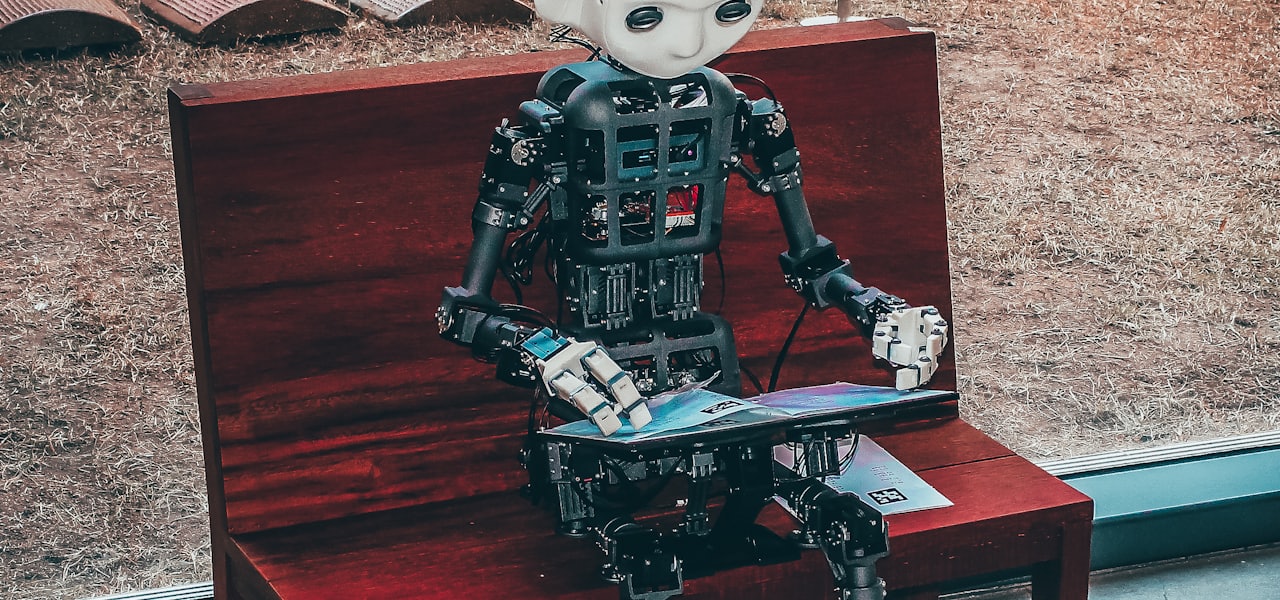
    Tomáš Mikolov is a Czech computer scientist working in the field of machine learning. In March 2020, Mikolov became a senior research scientist at the Czech Institute of Informatics, Robotics and Cybernetics. == Career == Mikolov obtained his PhD in Computer Science from Brno University of Technology for his work on recurrent neural network-based language models. He is the lead author of the 2013 paper that introduced the Word2vec technique in natural language processing and is an author on the FastText architecture. Mikolov came up with the idea to generate text from neural language models in 2007 and his RNNLM toolkit was the first to demonstrate the capability to train language models on large corpora, resulting in large improvements over the state of the art. Prior to joining Facebook in 2014, Mikolov worked as a visiting researcher at Johns Hopkins University, Université de Montréal, Microsoft and Google. He left Facebook at some time in 2019/2020 to join the Czech Institute of Informatics, Robotics and Cybernetics. Mikolov has argued that humanity might be at a greater existential risk if an artificial general intelligence is not developed.

    Read more →
  • Reverse correlation technique

    Reverse correlation technique

    The reverse correlation technique is a data driven study method used primarily in psychological and neurophysiological research. This method earned its name from its origins in neurophysiology, where cross-correlations between white noise stimuli and sparsely occurring neuronal spikes could be computed quicker when only computing it for segments preceding the spikes. The term has since been adopted in psychological experiments that usually do not analyze the temporal dimension, but also present noise to human participants. In contrast to the original meaning, the term is here thought to reflect that the standard psychological practice of presenting stimuli of defined categories to the participants is "reversed": Instead, the participant's mental representations of categories are estimated from interactions of the presented noise and the behavioral responses. It is used to create composite pictures of individual and/or group mental representations of various items (e.g. faces, bodies, and the self) that depict characteristics of said items (e.g. trustworthiness and self-body image). This technique is helpful when evaluating the mental representations of those with and without mental illnesses. == Terms == This technique utilizes spike-triggered average to explain what areas of signal and noise in an image are valuable for the given research question. Signal is information used to produce objects of value that help explain and connect the world around us. Noise is commonly referred to as unwanted signal that obscures the information that the signal is trying to present. Most importantly for reverse correlation studies, noise is randomly varying information. To determine the areas of importance using reverse correlation, noise is applied to a base image and then evaluated by observers. A base image is any image void of noise that relates to the research question. A base image that has noise superimposed on top is the stimuli that is presented to and evaluated by participants. Each time a new set of stimuli is presented to a participant, this is known as a trial. After a participant has responded to hundreds to thousands of trials, a researcher is ready to create a classification image. A classification image (abbreviated as "CI" in some studies) is a single image that represents the average noise patterns in the images selected by participants. A classification image can also be computed for groups by averaging the individuals’ classification images. These classification images are what researchers use to interpret the data and draw conclusions. As a whole, the reverse correlation method is a process that results in a composite image (from an individual or group) that can be used to estimate and interpret mental representations. == Basic study layout == The reverse correlation method is typically executed as an in-lab computer experiment. This method follows four broad steps. Each of the following steps are described in greater detail below. After creating a research question and determining that the reverse correlation method is the most suitable technique to answer the question, a researcher must (1) design randomly varying stimuli. After the stimuli have been prepared, a researcher should (2) collect data from participants who will see and respond to approximately 300 -1,000 trials. Each trial will either consist of one or two images (side by side) derived from the same base image with noise superimposed on top. Participant responses will depend on the chosen study design; if a researcher presents only one image at a time, participants rate the image on a 4pt scale, but when two images are shown, the participant is asked to choose which best aligns with the given category (e.g. choose the image that looks the most aggressive). Once all of the data is collected, the researcher will (3) compute classification images for each participant and using those images compute group classification images. Finally, with the classification images available, the researcher will (4) evaluate the images and draw conclusions about their results. === Step 1: making stimuli === When designing the stimuli for a reverse correlation study, the two primary factors that one should consider are (1) the base image and (2) the noise that will be used. While not all bases are images per se, the majority are and for this reason the base is typically referred to as a base image. The base image should represent whatever the research question is addressing. For example, if you are interested in peoples’ mental representations of Chinese people, it would not make sense to use a base image of a Spanish or Caucasian person. Again, if you are interested in the mental representations of male vocal patterns, it would make the most sense to use a base vocal pattern that has been produced by a male. Having a base is important because it provides a kind of anchor for participants to work from. When there is no base image, the number of trials that are required increases dramatically, thus making it harder to collect data. While there are studies that have excluded a base image, (e.g. the S study), for more elaborate and nuanced research questions, it is important to have a base image that is a fair representation of what participants are being asked to categorize. Photographs of faces are generally the most popular base image. Although the reverse correlation method is capable of investigating a wide variety of research questions, the most common application of the method is for evaluating faces on a single trait. Reverse correlation studies that address evaluations of the face are sometimes referred to as being a face space reverse correlation model (FSRCM). Thankfully, there are existing databases for face images of varying demographics and emotion that work well as base images. The reverse correlation method can also be used to help researchers identify what areas of an image (e.g. the areas on the face) have diagnostic value. In order to identify these areas of value, researchers start by minimizing the space a participant can pull information from. By imposing a “mask” on an image (e.g. blur an image while leaving random areas un-blurred), this reduces the information individuals might see, and forces them to focus on certain areas. Then, if/when participants are able to correctly identify an image with a trait repeatedly, we can draw conclusions about what areas have diagnostic value. While faces and visual stimuli are the most popular, this is not the only stimuli that can be used in a reverse correlation study. This method was originally designed for auditory stimuli which allows researchers to investigate how perceivers interpret auditory information and create trait based attributions to different sound patterns. For example, by segmenting a vocal recording of a single word (total sound time 426 ms) into six segments (71 ms each), and varying each segment's pitch using Gaussian distributions, researchers were able to uncover what vocal patterns people associated with certain traits. Specifically, this study investigated how listeners rated sound clips of the word “really” as sounding more interrogative (i.e. like the more common reverse correlation studies this study had participants listen to two sound clips per trial, choose which fit the category the best, and then created an average of the pitch contours). Beyond face and auditory perception, research utilizing the reverse correlation method has expanded to investigate how individuals see three-dimensional objects in images with noise (but no signal). After selecting your base image, regardless of what the image is, it is helpful to apply a Gaussian blur to smooth noise in the image. While noise will be applied later, it is helpful to reduce existing noise in the photo before applying your chosen noise. There are three primary choices when it comes to noise: white noise, sine-wave noise, and Gabor noise. The latter two of these constrain the configurations that the noise can have, and because of this white noise is usually the most commonly used. Regardless of the type of noise that is chosen, it is crucial that the noise randomly varies. === Step 2: data collection === Once the stimuli for the study has been developed, the researcher must make a few decisions before actually collecting the data. The researcher must come to a conclusion on how many stimuli will be presented at a time and how many trials the participants will see. In terms of stimuli presentation, a researcher can choose from either a 2-Image Forced Choice (2IFC) or a 4-Alternative Forced Choice (4AFC). The 2IFC presents two images at once (side by side) and requires participants to choose between the two on a specified category (e.g. which image looks the most like a male). Typically the noise from the left image is the mathematical inverse of the noise from the right image. This method was developed to better answer questions that could n

    Read more →
  • How to Choose an AI Blog Writer

    How to Choose an AI Blog Writer

    Curious about the best AI blog writer? An AI blog writer is software that uses machine learning to help you get more done — it combines speed, accuracy, and an interface that just works. Hands-on testing shows real-world results vary, so a short free trial is the smartest way to decide. Whether you are a beginner or a pro, the right AI blog writer slots into your workflow and pays for itself fast. This guide breaks down the top picks, their pros and cons, and who each one is best for.

    Read more →
  • Alex James (professor)

    Alex James (professor)

    Alex James is an Indian scientist who is a professor of AI hardware at School of Electronic Systems and Automation, and Dean at Digital University Kerala (IIITM-K). He is the professor in charge of Maker Village, Kochi, Chief Investigator of the centre for Intelligent IoT Sensors, and India Innovation Centre for Graphene. James features in top 1% scientists list published by Elsevier BV in the world in the field of Electrical and Electronics Engineering. He appeared in the list for the third consecutive time. He specializes in the scientific field of Memristive Systems, AI hardware, Neuromorphic VLSI (very-large-scale integration) system, Intelligent Imaging and Machine learning, and Analogue electronics. == Education and career == James earned his Ph.D. degree from the Queensland Micro and Nanotechnology Centre, Griffith University, Brisbane, Australia. Since 2009, he has been working as a faculty member at different universities in Australia and India. He was a Member of IET Vision and Imaging Network, and is a Member of BCS’ Fellows Technical Advisory Group (F-TAG). He is the founding chair for IEEE Kerala Section Circuits and Systems Society, and is a fellow of British Computer Society (FBCS), and Institution of Engineering and Technology. He was an Editorial Board Member of Information Fusion (2010–2014), Elsevier, and associate editor for HCIS (2015–2020), Springer; and Guest Associate Editor for IEEE Transactions on Emerging Topics in Computational Intelligence (2017). Currently he is serving as an Associate Editor of IEEE Access, Frontiers in Neuroscience, and IEEE Transactions on Circuits and Systems I: Regular Papers journal. == Scientific research == IIITM-K has achieved a breakthrough in developing Analogue Integrated circuit for implementing Generative Adversarial Networks (GAN) in a joint research project with Analogue Circuits and Image Sensors Lab, Siegen university and Fraunhofer, Germany, and Centre for Excellence in Artificial general intelligence and Neuromorphic Systems (neuroAGI). According to A. P. James, professor at the School of Electronics at IIITM-K, this complicated and meticulous AI circuits research can accelerate and operate GAN applications in low power devices. It also can be used to analyze and interpret 2019-nCoV data for a possible solution to the pandemic. An AI Semantic search engine has been created by a research team led by A.P. James to help researchers gain deeper insights into Scientific Investigation, particularly since the COVID-19 issue has necessitated the collection of a significant amount of complex scientific data. The search engine is called "www.vilokana.in, which is Sanskrit for "finding out. == Awards and honors == James is a member of IEEE CASS Technical committee on Nonlinear Circuits and Systems, IEEE CASS Technical committee on Cellular Nanoscale networks and Memristor Array Computing, IEEE Consumer Technology Society Technical Committee on Quantum in Consumer Technology (QCT), Technical Committee on Machine learning, Deep learning and AI in CE (MDA) and Member of BCS’ Fellows Technical Advisory Group (F-TAG). James was awarded best associate editor of IEEE Transactions on Circuits and Systems I: Regular Papers TCAS-I, by the IEEE Circuits and Systems Society (IEEE CASS) for the year 2020–21. He has been an associate editor for the journal since 2017. He is also an editorial board member of PeerJ CS and a Senior Member of IEEE, Life Member of ACM, Senior Fellow of HEA.

    Read more →
  • The Best Free AI Marketing Tool for Beginners

    The Best Free AI Marketing Tool for Beginners

    Looking for the best AI marketing tool? An AI marketing tool is software that uses machine learning to help you get more done — it can save you hours every week by automating repetitive work. Most options offer a generous free tier, with paid plans unlocking higher limits, faster processing, and team features. Whether you are a beginner or a pro, the right AI marketing tool slots into your workflow and pays for itself fast. Read on for hands-on impressions, pricing tiers, and the standout features that matter.

    Read more →
  • Apps to analyse COVID-19 sounds

    Apps to analyse COVID-19 sounds

    Apps to analyse COVID-19 sounds are mobile software applications designed to collect respiratory sounds and aid diagnosis in response to the COVID-19 pandemic. Numerous applications are in development, with different institutions and companies taking various approaches to privacy and data collection. Current efforts are aimed at gathering data. In a later stage, it is possible that sound apps will have the capacity (and ethical approvals) to provide information back to users. In order to develop and train signal analysis approaches, large datasets are required. == History == The COVID-19 outbreak was announced as a global pandemic by the World Health Organization in March 2020 and has affected a growing number of people globally. In this context, advanced artificial intelligence techniques are being considered as tools in aiding our response to global health crisis. Other COVID-19 apps which offer solutions for user tracking have been developed. At the same time a number of approaches which tries to use respiratory sounds and artificial intelligence to understand if the disease can be diagnosed have been proposed. A few studies are available as preprints (i.e. not yet peer-reviewed) documents. == Methodologies == The potential for using speech and sound analysis by artificial intelligence to help in this scenario, by surveying which types of related or contextually significant phenomena can be automatically assessed from speech or sound has been recently overviewed. These include the automatic recognition and monitoring of breathing, dry and wet coughing or sneezing sounds, speech under cold, eating behaviour, sleepiness, or pain. Additionally, the potential use-cases of intelligent speech analysis for COVID-19 diagnosed patients has also been presented. In particular, by analysing speech recordings from these patients, an audio-only-based model to automatically categorise the health state of patients from four aspects, including the severity of illness, sleep quality, fatigue, and anxiety, is constructed. This work shows promise in estimating the severity of illness. Machine learning methods have been explored to recognize and diagnose coughs from different diseases. These included a low complexity, automated recognition and diagnostic tool for screening respiratory infections that utilizes convolutional neural networks (CNNs) to detect cough within environment audio and diagnose three potential illnesses (i.e. bronchitis, bronchiolitis and pertussis) based on their unique cough audio features. A large-scale crowdsourced dataset of respiratory sounds has been collected to aid diagnosis of COVID-19: coughs and breathing sounds are sufficient to distinguish users affected by COVID-19 versus those affected by asthma or healthy controls. Behind these studies is the ambition that automated systems to screen for respiratory diseases based on voice, raw cough or other sound data would have positive medical applications in both clinical and public health arenas. == List of apps to analyse COVID-19 sounds ==

    Read more →
  • Samer Hassan

    Samer Hassan

    Samer Hassan is a computer scientist, social scientist, activist and researcher, focused on the study of the collaborative economy, online communities and decentralized technologies. He is an associate professor at Universidad Complutense de Madrid (Spain) and Faculty Associate at the Berkman Klein Center for Internet & Society at Harvard University. He is the recipient of an ERC Grant of 1.5M€ with the P2P Models project, to research blockchain-based decentralized autonomous organizations for the collaborative economy. == Education and career == Hassan is a Spanish/Lebanese scholar with an interdisciplinary background, which combines computer sciences with social sciences and activism. He received a degree in Computer Science and MSc in Artificial Intelligence from the Universidad Complutense de Madrid (UCM) in Spain. He also studied three years of Political Science at the distance learning university UNED. He then pursued a PhD in Social Simulation at the department of Software Engineering and Artificial Intelligence of UCM, supervised by the computer scientist Juan Pavón and the sociologist Millán Arroyo-Menéndez. He has been researching in several institutions, funded by several scholarships and awards, most notably Harvard's Real Colegio Complutense, and the Spanish postdoctoral grants Juan de la Cierva and José Castillejo. Thus, he was a visiting researcher at the Centre for Research in Social Simulation, in the Department of Sociology at the University of Surrey in the UK, working under the supervision of Nigel Gilbert (2007-2008), and a lecturer at the American University of Science and Technology in Lebanon (2010–11). He was selected as Fellow at the Berkman Klein Center for Internet & Society at Harvard University (2015-2017) and is presently a Faculty Associate at the same structure. Starting in 2024, he joined, as affiliate faculty, the Institute for Digital Cooperative Economy (The New School), part of the Platform Cooperativism Consortium. == Activism and social engagement == As an activist, Hassan has been engaged in both offline (La Tabacalera de Lavapiés, Medialab-Prado) and online (Ourproject.org, Barrapunto, Wikipedia) initiatives. He was accredited as a grassroots facilitator by the Altekio Cooperative. He co-founded the Comunes Nonprofit in 2009 and the Move Commons webtool project in 2010. He has co-organized practitioner-oriented workshops on platform co-ops and free/open source decentralized tools for communities, and has presented his work in non-academic conferences of Mozilla, the Internet Archive, and others. As a privacy advocate, he co-created a course on cyber-ethics which has been teaching since 2013 (as of 2021). He was co-founder of the Sci-Fdi Spanish science-fiction magazine. His gender is non-binary and uses he/they pronouns. == Work == Hassan's interdisciplinary research spans multiple fields, including online communities, online governance, online collaboration, decentralized technologies, blockchain-based decentralized autonomous organizations, free/libre/open source software, Commons-based peer production, agent-based social simulation, social movements and cyberethics. He has published more than 60 works in these fields. Hassan's PhD thesis focused on the methodological challenges for building data-driven social simulation models. The main model built simulated the transition from modern values to postmodern values in Spain. His methodological work also explored the combination of different artificial intelligence technologies, i.e. software agents with fuzzy logic, data mining, natural language processing, and microsimulation. In his postdoctoral period, he focused on experimenting with multiple software systems to facilitate the collaborative economy, e.g. semantic-web labelling for commons-based initiatives, distribution of value in peer production communities, agent-supported online assemblies, decentralized real-time collaborative software, decentralized blockchain based reputation, or blockchain-enabled commons governance. Hassan was Principal Investigator of the UCM partner in the EU-funded P2Pvalue project on building decentralized web-tools for collaborative communities. As such, he led the team that created SwellRT, a federated backend-as-a-service focused to ease development of apps featuring real-time collaboration. Intellectual Property of this project was transferred to the Apache Software Foundation in 2017. As part of this research line, Hassan's team also develop two SwellRT-based apps, "Teem" for management of social collectives and Jetpad, a federated real time editor. He presented the innovations concerning these software at Harvard's Berkman Klein Center and Harvard's Center for Research on Computation and Society. Other research lines offered outcomes beyond publications. "Wikichron", coled by Javier Arroyo, is a web tool to visualize MediaWiki community metrics, currently in production and available for third-parties. "Decentralized Science", led by Hassan's PhD student Ámbar Tenorio-Fornés, is a framework to facilitate decentralized infrastructure and open peer review in the scientific publication process, which has been selected by the European Commission to receive funding as a spin-off social enterprise. His research on blockchain and crowdfunding models awarded him with a commission from Triple Canopy. His team pushed forward a mapping of the ecosystem of blockchain for social good, led by the Joint Research Centre and published by the European Commission. As part of his ERC project P2P Models, Hassan and his team –including Silvia Semenzin– are investigating whether blockchain technology and Decentralized Autonomous Organizations could contribute to improving the governance of commons-oriented communities, both online and offline. Their work has been showcased for tackling the impact of blockchain on governance, proposing alternatives to the current sharing economy, emerging forms of techno-social systems like NFTs or prediction markets, or giving relevance to gender issues in the field. Hassan was invited to present the project achievements in Harvard Kennedy School, MIT Media Lab, Harvard's Data Privacy Lab, Harvard's Center for Research on Computation and Society, and Harvard's SEAS EconCS. British MP and Opposition Leader Ed Miliband showcased his research and its potential impact on policy. The project made public its way of organizing and its core values. In particular, it has shown a commitment to diversity as a core value in hiring, or choosing case studies. == Selected works == Arroyo, Javier; Davó, David; Martínez-Vicente, Elena; Faqir-Rhazoui, Youssef; Hassan, Samer (8 November 2022). "DAO-Analyzer: Exploring Activity and Participation in Blockchain Organizations" (PDF). Companion Publication of the 2022 Conference on Computer Supported Cooperative Work and Social Computing. CSCW'22 Companion. New York, NY, USA: Association for Computing Machinery. pp. 193–196. doi:10.1145/3500868.3559707. ISBN 978-1-4503-9190-0. Rozas, David; Tenorio-Fornés, Antonio; Díaz-Molina, Silvia; Hassan, Samer (2021). "When Ostrom Meets Blockchain: Exploring the Potentials of Blockchain for Commons Governance". SAGE Open. 11 (1): 215824402110025. doi:10.1177/21582440211002526. ISSN 2158-2440. Faqir-Rhazoui, Youssef; Ariza-Garzón, Miller-Janny; Arroyo, Javier; Hassan, Samer (8 May 2021). "Effect of the Gas Price Surges on User Activity in the DAOs of the Ethereum Blockchain" (PDF). Extended Abstracts of the 2021 CHI Conference on Human Factors in Computing Systems. CHI EA '21. New York, NY, USA: Association for Computing Machinery. pp. 1–7. doi:10.1145/3411763.3451755. ISBN 978-1-4503-8095-9. Hassan, Samer; Filippi, Primavera De (20 April 2021). "Decentralized Autonomous Organization". Internet Policy Review. 10 (2). doi:10.14763/2021.2.1556. hdl:10419/235960. ISSN 2197-6775. Joint Research Centre (European Commission); Hassan, Samer; Hakami, Anna; Brekke, Jaya Klara; De Filippi, Primavera; Lopéz Morales, Genoveva; Pólvora, Alexandre; Orgaz Alonso, Christian; Bodó, Balázs (2020). Scanning the European ecosystem of distributed ledger technologies for social and public good: what, why, where, how, and ways to move forward. LU: Publications Office of the European Union. doi:10.2760/300796. ISBN 978-92-76-21578-3. Filippi, Primavera De; Hassan, Samer (14 November 2016). "Blockchain technology as a regulatory technology: From code is law to law is code". First Monday. arXiv:1801.02507. doi:10.5210/fm.v21i12.7113. ISSN 1396-0466.

    Read more →
  • Probabilistic context-free grammar

    Probabilistic context-free grammar

    In theoretical linguistics and computational linguistics, probabilistic context free grammars (PCFGs) extend context-free grammars, similar to how hidden Markov models extend regular grammars. Each production is assigned a probability. The probability of a derivation (parse) is the product of the probabilities of the productions used in that derivation. These probabilities can be viewed as parameters of the model, and for large problems it is convenient to learn these parameters via machine learning. A probabilistic grammar's validity is constrained by context of its training dataset. PCFGs originated from grammar theory, and have application in areas as diverse as natural language processing to the study the structure of RNA molecules and design of programming languages. Designing efficient PCFGs has to weigh factors of scalability and generality. Issues such as grammar ambiguity must be resolved. The grammar design affects results accuracy. Grammar parsing algorithms have various time and memory requirements. == Definitions == Derivation: The process of recursive generation of strings from a grammar. Parsing: Finding a valid derivation using an automaton. Parse Tree: The alignment of the grammar to a sequence. An example of a parser for PCFG grammars is the pushdown automaton. The algorithm parses grammar nonterminals from left to right in a stack-like manner. This brute-force approach is not very efficient. In RNA secondary structure prediction variants of the Cocke–Younger–Kasami (CYK) algorithm provide more efficient alternatives to grammar parsing than pushdown automata. Another example of a PCFG parser is the Stanford Statistical Parser which has been trained using Treebank. == Formal definition == Similar to a CFG, a probabilistic context-free grammar G can be defined by a quintuple: G = ( M , T , R , S , P ) {\displaystyle G=(M,T,R,S,P)} where M is the set of non-terminal symbols T is the set of terminal symbols R is the set of production rules S is the start symbol P is the set of probabilities on production rules == Relation with hidden Markov models == PCFGs models extend context-free grammars the same way as hidden Markov models extend regular grammars. The Inside-Outside algorithm is an analogue of the Forward-Backward algorithm. It computes the total probability of all derivations that are consistent with a given sequence, based on some PCFG. This is equivalent to the probability of the PCFG generating the sequence, and is intuitively a measure of how consistent the sequence is with the given grammar. The Inside-Outside algorithm is used in model parametrization to estimate prior frequencies observed from training sequences in the case of RNAs. Dynamic programming variants of the CYK algorithm find the Viterbi parse of a RNA sequence for a PCFG model. This parse is the most likely derivation of the sequence by the given PCFG. == Grammar construction == Context-free grammars are represented as a set of rules inspired from attempts to model natural languages. The rules are absolute and have a typical syntax representation known as Backus–Naur form. The production rules consist of terminal { a , b } {\displaystyle \left\{a,b\right\}} and non-terminal S symbols and a blank ϵ {\displaystyle \epsilon } may also be used as an end point. In the production rules of CFG and PCFG the left side has only one nonterminal whereas the right side can be any string of terminal or nonterminals. In PCFG nulls are excluded. An example of a grammar: S → a S , S → b S , S → ϵ {\displaystyle S\to aS,S\to bS,S\to \epsilon } This grammar can be shortened using the '|' ('or') character into: S → a S | b S | ϵ {\displaystyle S\to aS|bS|\epsilon } Terminals in a grammar are words and through the grammar rules a non-terminal symbol is transformed into a string of either terminals and/or non-terminals. The above grammar is read as "beginning from a non-terminal S the emission can generate either a or b or ϵ {\displaystyle \epsilon } ". Its derivation is: S ⇒ a S ⇒ a b S ⇒ a b b S ⇒ a b b {\displaystyle S\Rightarrow aS\Rightarrow abS\Rightarrow abbS\Rightarrow abb} Ambiguous grammar may result in ambiguous parsing if applied on homographs since the same word sequence can have more than one interpretation. Pun sentences such as the newspaper headline "Iraqi Head Seeks Arms" are an example of ambiguous parses. One strategy of dealing with ambiguous parses (originating with grammarians as early as Pāṇini) is to add yet more rules, or prioritize them so that one rule takes precedence over others. This, however, has the drawback of proliferating the rules, often to the point where they become difficult to manage. Another difficulty is overgeneration, where unlicensed structures are also generated. Probabilistic grammars circumvent these problems by ranking various productions on frequency weights, resulting in a "most likely" (winner-take-all) interpretation. As usage patterns are altered in diachronic shifts, these probabilistic rules can be re-learned, thus updating the grammar. Assigning probability to production rules makes a PCFG. These probabilities are informed by observing distributions on a training set of similar composition to the language to be modeled. On most samples of broad language, probabilistic grammars where probabilities are estimated from data typically outperform hand-crafted grammars. CFGs when contrasted with PCFGs are not applicable to RNA structure prediction because while they incorporate sequence-structure relationship they lack the scoring metrics that reveal a sequence structural potential == Weighted context-free grammar == A weighted context-free grammar (WCFG) is a more general category of context-free grammar, where each production has a numeric weight associated with it. The weight of a specific parse tree in a WCFG is the product (or sum ) of all rule weights in the tree. Each rule weight is included as often as the rule is used in the tree. A special case of WCFGs are PCFGs, where the weights are (logarithms of ) probabilities. An extended version of the CYK algorithm can be used to find the "lightest" (least-weight) derivation of a string given some WCFG. When the tree weight is the product of the rule weights, WCFGs and PCFGs can express the same set of probability distributions. == Applications == === RNA structure prediction === Since the 1990s, PCFG has been applied to model RNA structures. Energy minimization and PCFG provide ways of predicting RNA secondary structure with comparable performance. However structure prediction by PCFGs is scored probabilistically rather than by minimum free energy calculation. PCFG model parameters are directly derived from frequencies of different features observed in databases of RNA structures rather than by experimental determination as is the case with energy minimization methods. The types of various structure that can be modeled by a PCFG include long range interactions, pairwise structure and other nested structures. However, pseudoknots can not be modeled. PCFGs extend CFG by assigning probabilities to each production rule. A maximum probability parse tree from the grammar implies a maximum probability structure. Since RNAs preserve their structures over their primary sequence, RNA structure prediction can be guided by combining evolutionary information from comparative sequence analysis with biophysical knowledge about a structure plausibility based on such probabilities. Also search results for structural homologs using PCFG rules are scored according to PCFG derivations probabilities. Therefore, building grammar to model the behavior of base-pairs and single-stranded regions starts with exploring features of structural multiple sequence alignment of related RNAs. S → a S a | b S b | a a | b b {\displaystyle S\to aSa|bSb|aa|bb} The above grammar generates a string in an outside-in fashion, that is the basepair on the furthest extremes of the terminal is derived first. So a string such as a a b a a b a a {\displaystyle aabaabaa} is derived by first generating the distal a's on both sides before moving inwards: S ⇒ a S a ⇒ a a S a a ⇒ a a b S b a a ⇒ a a b a a b a a {\displaystyle S\Rightarrow aSa\Rightarrow aaSaa\Rightarrow aabSbaa\Rightarrow aabaabaa} A PCFG model extendibility allows constraining structure prediction by incorporating expectations about different features of an RNA . Such expectation may reflect for example the propensity for assuming a certain structure by an RNA. However incorporation of too much information may increase PCFG space and memory complexity and it is desirable that a PCFG-based model be as simple as possible. Every possible string x a grammar generates is assigned a probability weight P ( x | θ ) {\displaystyle P(x|\theta )} given the PCFG model θ {\displaystyle \theta } . It follows that the sum of all probabilities to all possible grammar productions is ∑ x P ( x | θ ) = 1 {\displaystyle \sum _{\text{x}}P(x|\theta )=1} . The scores

    Read more →