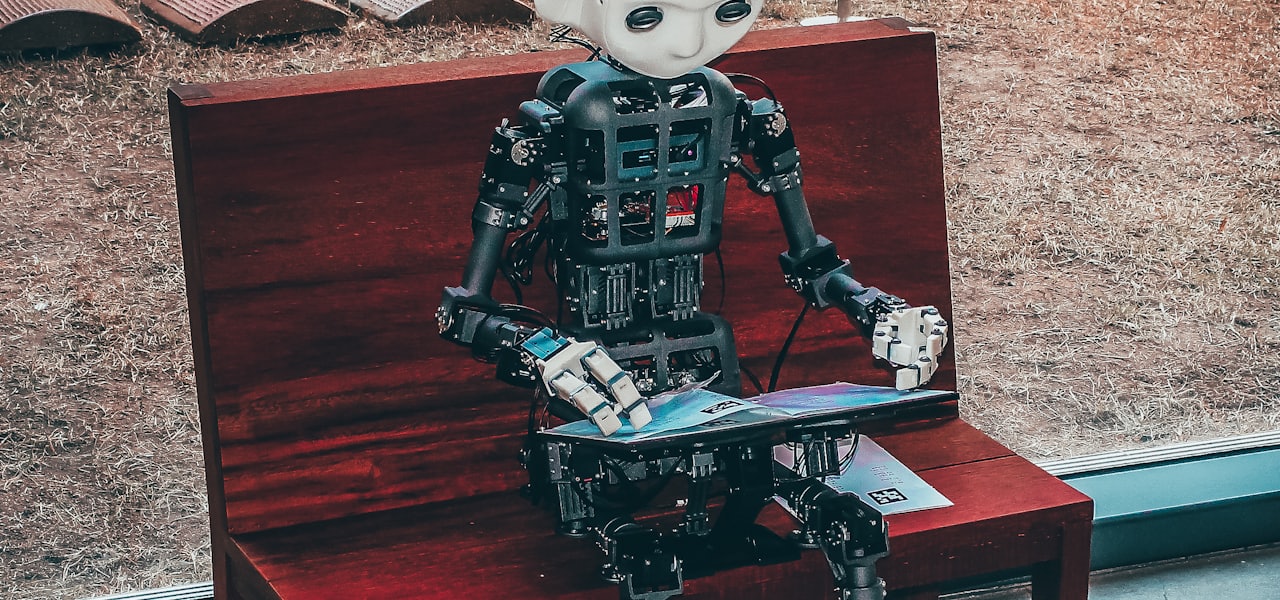
Educational robotics teaches the design, analysis, application and operation of robots. Robots include articulated robots, mobile robots or autonomous vehicles. Educational robotics can be taught from elementary school to graduate programs. Robotics may also be used to motivate and facilitate the instruction other, often foundational, topics such as computer programming, artificial intelligence or engineering design. == Education and training == Robotics engineers design robots, maintain them, develop new applications for them, and conduct research to expand the potential of robotics. Robots have become a popular educational tool in some middle and high schools, as well as in numerous youth summer camps, raising interest in programming, artificial intelligence and robotics among students. First-year computer science courses at several universities now include programming of a robot in addition to traditional software engineering-based coursework. == Category of Educational robotics == The categories of educational robots seen as having more than one category. It can be alienated into different categories based on their physical design and coding method. Generally they are categorised as arm robots, wheeled mobile robots and humanoid robots. Tangibly, coded robots uses a physical means of coding instead of the screens coding. === Initiatives in schools === Leachim, was a robot teacher programmed with the class curricular, as well as certain biographical information on the 40 students whom it was programmed to teach. Leachim could synthesize human speech using Diphone synthesis. It was invented by Michael J. Freeman in 1974 and was tested in a fourth grade classroom in the Bronx, New York. === Post-secondary degree programs === From approximately 1960 through 2005, robotics education at post-secondary institutions took place through elective courses, thesis experiences and design projects offered as part of degree programs in traditional academic disciplines, such as mechanical engineering, electrical engineering, industrial engineering or computer science. Since 2005, more universities have begun granting degrees in robotics as a discipline in its own right, often under the name "Robotic Engineering". Based on a 2015 web-based survey of robotics educators, the degree programs and their estimates annual graduates are listed alphabetically below. Note that only official degree programs where the word "robotics" appears on the transcript or diploma are listed here; whereas degree programs in traditional disciplines with course concentrations or thesis topics related to robotics are deliberately omitted. === Certification === The Robotics Certification Standards Alliance (RCSA) is an international robotics certification authority that confers various industry- and educational-related robotics certifications. === Summer robotics camp === Several summer camp programs include robotics as part of their core curriculum. In addition, youth summer robotics programs are frequently offered by celebrated museums such as the American Museum of Natural History and The Tech Museum of Innovation in Silicon Valley, CA, just to name a few. There are of benefits that come from attending robotics camps. It teaches students how to use teamwork, resilience and motivation, and decision-making. Students learn teamwork because most camps involve exciting activities requiring teamwork. Resilience and motivation is expected because by completing the challenging programs, students feel talented and accomplished after they complete the program. Also students are given unique situations making them make decisions to further their situation. === Educational robotics in special education === Educational robotics can be a useful tool in early and special education. According to a journal on new perspectives in science education, educational robotics can help to develop abilities that promote autonomy and assist their integration into society. Social and personal skills can also be developed through educational robotics. Using Lego Mindstorms NXT, schoolteachers were able to work with middle school aged children in order to develop programs and improve the children's social and personal skills. Additionally, problem solving skills and creativity were utilized through the creation of artwork and scenery to house the robots. Other studies show the benefits of educational robotics in special education as promoting superior cognitive functions, including executive functions. This can lead to an increased ability in "problem solving, reasoning and planning in typically developing preschool children." Through eight weeks of weekly forty-five-minute group sessions using the Bee-Bot, an increase in interest, attention, and interaction between both peers and adults was found in the school and preschool-aged children with Down Syndrome. This study suggests that educational robotics in the classroom can also lead to an improvement in visuo-spatial memory and mental planning. Furthermore, executive functions seemed to be possible in one child during this study.
Reference Software International
Reference Software International, Inc. (RSI), was an American software developer active from 1985 to 1993 and based in Albuquerque, New Mexico, and San Francisco, California. The company released several productivity and reference software packages, including the Grammatik grammar checker, for MS-DOS. The company was acquired by WordPerfect Corporation in 1993. == History == === Background (1980–1985) === Reference Software International, Inc., was founded by Donald "Don" Emery and Bruce Wampler in 1985 in San Francisco, California. Both Wampler and Emery were college professors when they founded RSI: Wampler at the University of New Mexico as a professor of computer science and Emery a professor of marketing at San Francisco State University. After graduating from the University of Utah in around 1978, Wampler founded his first software company, Aspen Software, in Tijeras, New Mexico, in 1979. Wampler founded Aspen to develop an early spell checker software package, called Proofreader, for the TRS-80, licensing Random House's Webster's Unabridged Dictionary for the package's lexicon. In 1980, he began development on a grammar checker inspired by Writer's Workbench, a pioneering grammar checker for Unix systems. Wampler used Writer's Workbench heavily during the writer of his doctoral dissertation but disliked having to jump between the Apple II on which he composed the dissertation and the mainframe on which Writer's Workbench ran, and so wanted to develop a version of the latter for microcomputers. Wampler's work came to fruition as Grammatik in 1981, eventually ported to several other microcomputer platforms in the early 1980s. In 1983, by which point the company had 12 employees and sold a combined 80,000 units of Grammatik and Proofreader, Wampler sold Aspen to Dictronics, a software company best known for developing the Electronic Thesaurus, an early thesaurus program for microcomputers. Dictronics was in turn purchased by Wang Laboratories; according to Wampler, "Wang bought [Aspen] and sat on it. They did nothing with it". Wampler moved on to teach for the University of New Mexico, but, frustrated by Wang's inaction, got the urge to resurrect his work. In 1985, he was able to license back Grammatik and Proofreader from a small California-based software firm that had grandfathered rights to a forked version of both. In the same year, he met Emery, who, impressed by Wampler's, founded Reference Software International to market his software. RSI's research and development headquarters were based in Albuquerque, while the company's sales and marketing department was based in Walnut Creek, California. === Success (1985–1992) === In August 1985, RSI released their first product: the Random House Reference Set, a new version of Proofreader for the IBM Personal Computer and compatibles, revised to be a terminate-and-stay-resident program that ran atop other word processors such as WordStar or WordPerfect. At the time, Reference Set was the only such program on the market that functioned like this. RSI netted $114,000 from sales of Reference Set by the end of 1985. In June 1986, they released version 2.0 of Grammatik as Grammatik II for the PC. The latter was a breakout hit for RSI, receiving praise in the press (including technology journals such as PC Magazine) and RSI selling 1,000 units a month. In spring 1987, they released Reference Set II, which allowed users to import their own words into the built-in dictionary and added a thesaurus of 300,000 words. In November 1987, they released version 3.0 of Reference Set, which comprised two new field-specific dictionaries for the medical and legal professions. As well as the general Random House dictionary and thesaurus, it included Stedman's Medical Dictionary and Black's Law Dictionary. Emery consulted Paul Brest and Bob Jackson—professors of law at Stanford Law School and San Francisco State respectively—for the curation of the law dictionary; and Burton Grebin—at the time the executive director of Mount Saint Mary's Hospital—for the curation of the medical dictionary. In fall 1988, the company released Grammatik III, a total rewrite that made use of artificial intelligence to more accurately judge the grammar of sentences by breaking them down into a syntactic hierarchy. Grammatik III received universal acclaim, with Gloria Morris of InfoWorld calling it the apparent leader in the grammar checking field and Sandra Anderson of Mac Home Journal calling it "hands down ... the best of the industry" six years after its release. By 1989, the product had competitors in Correct Grammar by Lifetree Software and RightWriter by Rightsoft, Inc. By 1990, RSI achieved annual sales of $9.7 million. In the same year they released Grammatik IV, which was the first to offer direct integration with WordPerfect on both MS-DOS and Windows. In March 1992—by which point RSI had sold 1.5 million copies of Grammatik across all versions—the company released version 5 of the program, another rewrite that updated the lexicon further and added new functions such as word redundancy detection. Around the same time, the company introduced Easy Proof, a pared-down version of Grammatik intended for novice writers, students, and family computers. In 1991, the company was engaged in a trademark dispute with Systems Compatibility Corporation (SCC) of Chicago, Illinois, over the rights to the Software Toolkit title. Both companies had published software bundles bearing the name in the turn of the 1990s; SCC had published theirs first in 1988 and registered the trademark with the USPTO. SCC was granted a restraining order against RSI in January 1991. The following month, RSI agreed to rename their product, preventing a protracted legal battle. === Decline and acquisition (1992–1993) === By early 1992, RSI achieved annual sales of more than $13 million, employed 120 people, and had opened international offices in London, Belgium, and Antwerp to sell foreign versions of Reference Set and Grammatik. The company reached peak employment in the middle of 1992, with 140 employees. However, RSI's launch of six disparate titles in the year proved problematic for the company when they failed to sell as well as they had projected, and the company laid off employees by the dozens. By December 1992, only 71 employees were left, 32 from their San Francisco office. On the last day of 1992, RSI received an acquisition offer from WordPerfect Corporation, makers of the namesake word processor based in Orem, Utah. The deal was inked in January 1993, RSI's stakeholders receiving $19 million. The company's remaining employees were absorbed into WordPerfect in Orem. WordPerfect continued selling Grammatik as a standalone product for several years.
Kruskal count
The Kruskal count (also known as Kruskal's principle, Dynkin–Kruskal count, Dynkin's counting trick, Dynkin's card trick, coupling card trick or shift coupling) is a probabilistic concept originally demonstrated by the Russian mathematician Evgenii Borisovich Dynkin in the 1950s or 1960s discussing coupling effects and rediscovered as a card trick by the American mathematician Martin David Kruskal in the early 1970s as a side-product while working on another problem. It was published by Kruskal's friend Martin Gardner and magician Karl Fulves in 1975. This is related to a similar trick published by magician Alexander F. Kraus in 1957 as Sum total and later called Kraus principle. Besides uses as a card trick, the underlying phenomenon has applications in cryptography, code breaking, software tamper protection, code self-synchronization, control-flow resynchronization, design of variable-length codes and variable-length instruction sets, web navigation, object alignment, and others. == Card trick == The trick is performed with cards, but is more a magical-looking effect than a conventional magic trick. The magician has no access to the cards, which are manipulated by members of the audience. Thus sleight of hand is not possible. Rather the effect is based on the mathematical fact that the output of a Markov chain, under certain conditions, is typically independent of the input. A simplified version using the hands of a clock performed by David Copperfield is as follows. A volunteer picks a number from one to twelve and does not reveal it to the magician. The volunteer is instructed to start from 12 on the clock and move clockwise by a number of spaces equal to the number of letters that the chosen number has when spelled out. This is then repeated, moving by the number of letters in the new number. The output after three or more moves does not depend on the initially chosen number and therefore the magician can predict it.
Social media optimization
Social media optimization (SMO) is the use of online platforms to generate income or publicity to increase the awareness of a brand, event, product or service. Types of social media involved include RSS feeds, blogging sites, social bookmarking sites, social news websites, video sharing websites such as YouTube and social networking sites such as Facebook, Instagram, TikTok and X (Twitter). SMO is similar to search engine optimization (SEO) in that the goal is to drive web traffic, and draw attention to a company or creator. SMO's focal point is on gaining organic links to social media content. In contrast, SEO's core is about reaching the top of the search engine hierarchy. In general, social media optimization refers to optimizing a website and its content to encourage more users to use and share links to the website across social media and networking sites. SMO is used to strategically create online content ranging from well-written text to eye-catching digital photos or video clips that encourages and entices people to engage with a website. Users share this content, via its weblink, with social media contacts and friends. Common examples of social media engagement are "liking and commenting on posts, retweeting, embedding, sharing, and promoting content". Social media optimization is also an effective way of implementing online reputation management (ORM), meaning that if someone posts bad reviews of a business, an SMO strategy can ensure that the negative feedback is not the first link to come up in a list of search engine results. In the 2010s, with social media sites overtaking TV as a source for news for young people, news organizations have become increasingly reliant on social media platforms for generating web traffic. Publishers such as The Economist employ large social media teams to optimize their online posts and maximize traffic, while other major publishers now use advanced artificial intelligence (AI) technology to generate higher volumes of web traffic. == Relationship with search engine optimization == Social media optimization is an increasingly important factor in search engine optimization, which is the process of designing a website in a way so that it has as high a ranking as possible on search engines. Search engines are increasingly utilizing the recommendations of users of social networks such as Reddit, Facebook, Tumblr, Twitter, YouTube, LinkedIn, Pinterest and Instagram to rank pages in the search engine result pages. The implication is that when a webpage is shared or "liked" by a user on a social network, it counts as a "vote" for that webpage's quality. Thus, search engines can use such votes accordingly to properly ranked websites in search engine results pages. Furthermore, since it is more difficult to tip the scales or influence the search engines in this way, search engines are putting more stock into social search. This, coupled with increasingly personalized search based on interests and location, has significantly increased the importance of a social media presence in search engine optimization. Due to personalized search results, location-based social media presences on websites such as Yelp, Google Places, Foursquare, and Yahoo! Local have become increasingly important. While social media optimization is related to search engine marketing, it differs in several ways. Primarily, SMO focuses on driving web traffic from sources other than search engines, though improved search engine ranking is also a benefit of successful social media optimization. Further, SMO is helpful to target particular geographic regions in order to target and reach potential customers. This helps in lead generation (finding new customers) and contributes to high conversion rates (i.e., converting previously uninterested individuals into people who are interested in a brand or organization). == Relationship with viral marketing == Social media optimization is in many ways connected to the technique of viral marketing or "viral seeding" where word of mouth is created through the use of networking in social bookmarking, video and photo sharing websites. An effective SMO campaign can harness the power of viral marketing; for example, 80% of activity on Pinterest is generated through "repinning." Furthermore, by following social trends and utilizing alternative social networks, websites can retain existing followers while also attracting new ones. This allows businesses to build an online following and presence, all linking back to the company's website for increased traffic. For example, with an effective social bookmarking campaign, not only can website traffic be increased, but a site's rankings can also be increased. In a similar way, the engagement with blogs creates a similar result by sharing content through the use of RSS in the blogosphere. Social media optimization is considered an integral part of an online reputation management (ORM) or search engine reputation management (SERM) strategy for organizations or individuals who care about their online presence. SMO is one of six key influencers that affect Social Commerce Construct (SCC). Online activities such as consumers' evaluations and advices on products and services constitute part of what creates a Social Commerce Construct (SCC). Social media optimization is not limited to marketing and brand building. Increasingly, smart businesses are integrating social media participation as part of their knowledge management strategy (i.e., product/service development, recruiting, employee engagement and turnover, brand building, customer satisfaction and relations, business development and more). Additionally, social media optimization can be implemented to foster a community of the associated site, allowing for a healthy business-to-consumer (B2C) relationship. == Origins and implementation == According to technologist Danny Sullivan, the term "social media optimization" was first used and described by marketer Rohit Bhargava on his marketing blog in August 2006. In the same post, Bhargava established the five important rules of social media optimization. Bhargava believed that by following his rules, anyone could influence the levels of traffic and engagement on their site, increase popularity, and ensure that it ranks highly in search engine results. An additional 11 SMO rules have since been added to the list by other marketing contributors. The 16 rules of SMO, according to one source, are as follows: Increase your linkability Make tagging and bookmarking easy Reward inbound links Help your content to "travel" via sharing Encourage the mashup, where users are allowed to remix content Be a user resource, even if it doesn't help you (e.g., provide resources and information for users) Reward helpful and valuable users Participate (join the online conversation) Know how to target your audience Create new, quality content ("web scraping" of existing online content is ignored by good search engines) Be "real" in the tone and style of the posts Don't forget your roots; be humble Don't be afraid to experiment, innovate, try new things and "stay fresh" Develop an SMO strategy Choose your SMO tactics wisely Make SMO a key part of your marketing process and develop company best practices Bhargava's initial five rules were more specifically designed to SMO, while the list is now much broader and addresses everything that can be done across different social media platforms. According to author and CEO of TopRank Online Marketing, Lee Odden, a Social Media Strategy is also necessary to ensure optimization. This is a similar concept to Bhargava's list of rules for SMO. The Social Media Strategy may consider: Objectives e.g. creating brand awareness and using social media for external communications. Listening e.g. monitoring conversations relating to customers and business objectives. Audience e.g. finding out who the customers are, what they do, who they are influenced by, and what they frequently talk about. It is important to work out what customers want in exchange for their online engagement and attention. Participation and content e.g. establishing a presence and community online and engaging with users by sharing useful and interesting information. Measurement e.g. keeping a record of likes and comments on posts, and the number of sales to monitor growth and determine which tactics are most useful in optimizing social media. According to Lon Safko and David K. Brake in The Social Media Bible, it is also important to act like a publisher by maintaining an effective organizational strategy, to have an original concept and unique "edge" that differentiates one's approach from competitors, and to experiment with new ideas if things do not work the first time. If a business is blog-based, an effective method of SMO is using widgets that allow users to share content to their personal social media platforms. This will ultimately reach a wider target audience and drive mor
Copyright
A copyright is a type of intellectual property that gives its owner the exclusive legal right to copy, distribute, adapt, display, and perform a creative work, usually for a limited time. The creative work may be in a literary, artistic, educational, or musical form. Copyright is intended to protect the original expression of an idea in the form of a creative work, but not the idea itself. A copyright is subject to limitations based on public interest considerations, such as the fair use doctrine in the United States and fair dealing doctrine in the United Kingdom. Some jurisdictions require "fixing" copyrighted works in a tangible form. It is often shared among multiple authors, each of whom holds a set of rights to use or license the work, and who are commonly referred to as rights holders. These rights normally include reproduction, control over derivative works, distribution, public performance, and moral rights such as attribution. Copyrights can be granted by public law and are in that case considered "territorial rights". This means that copyrights granted by the law of a certain state do not extend beyond the territory of that specific jurisdiction. Copyrights of this type vary by country; many countries, and sometimes a large group of countries, have made agreements with other countries on procedures applicable when works "cross" national borders or national rights are inconsistent. Typically, the public law duration of a copyright expires 50 to 100 years after the creator dies, depending on the jurisdiction. Some countries require certain copyright formalities to establishing copyright, others recognize copyright in any completed work, without a formal registration. When the copyright of a work expires, it enters the public domain. == History == === Background === The concept of copyright developed after the printing press came into use in Europe in the 15th and 16th centuries. It was associated with a common law and rooted in the civil law system. The printing press made it much cheaper to produce works, but as there was initially no copyright law, anyone could buy or rent a press and print any text. Popular new works were immediately re-set and re-published by competitors, so printers needed a constant stream of new material. Fees paid to authors for new works were high and significantly supplemented the incomes of many academics. Printing brought profound social changes. The rise in literacy across Europe led to a dramatic increase in the demand for reading matter. Prices of reprints were low, so publications could be bought by poorer people, creating a mass audience. In German-language markets before the advent of copyright, technical materials, like academic papers and handbooks, were inexpensive and widely available; it has been suggested this contributed to Germany's industrial and economic success. === Conception === The concept of copyright first developed in England. In reaction to the printing of "scandalous books and pamphlets", the English Parliament passed the Licensing of the Press Act 1662, which required all intended publications to be registered with the government-approved Stationers' Company, giving the Stationers the right to regulate what material could be printed. The Statute of Anne, enacted in 1710 in England and Scotland, provided the first legislation to protect copyrights (but not authors' rights). The Copyright Act 1814 extended more rights for authors but did not protect British publications from being reprinted in the US. The Berne International Copyright Convention of 1886 finally provided protection for authors among the countries who signed the agreement, although the US did not join the Berne Convention until 1989. In the US, the Constitution grants Congress the right to establish copyright and patent laws. Shortly after the Constitution was passed, Congress enacted the Copyright Act of 1790, modeling it after the Statute of Anne. While the national law protected authors' published works, authority was granted to the states to protect authors' unpublished works. The most recent major overhaul of copyright in the US, the Copyright Act of 1976, extended federal copyright to works as soon as they are created and "fixed", without requiring publication or registration. State law continues to apply to unpublished works that are not otherwise copyrighted by federal law. This act also changed the calculation of copyright term from a fixed term (then a maximum of fifty-six years) to "life of the author plus 50 years". These changes brought the US closer to conformity with the Berne Convention, and in 1989 the United States further revised its copyright law and joined the Berne Convention officially. Copyright laws allow products of creative human activities, such as literary and artistic production, to be preferentially exploited and thus incentivized. Different cultural attitudes, social organizations, economic models and legal frameworks are seen to account for why copyright emerged in Europe and not, for example, in Asia. In the Middle Ages in Europe, there was generally a lack of any concept of literary property due to the general relations of production, the specific organization of literary production and the role of culture in society. The latter refers to the tendency of oral societies, such as that of Europe in the medieval period, to view knowledge as the product and expression of the collective, rather than to see it as individual property. However, with copyright laws, intellectual production comes to be seen as a product of an individual, with attendant rights. The most significant point is that patent and copyright laws support the expansion of the range of creative human activities that can be commodified. This parallels the ways in which capitalism led to the commodification of many aspects of social life that earlier had no monetary or economic value perse. Copyright has developed into a concept that has a significant effect on nearly every modern industry, including not just literary work, but also forms of creative work such as sound recordings, films, photographs, software, and architecture. === National copyrights === Often seen as the first real copyright law, the 1709 British Statute of Anne gave authors and the publishers to whom they did chose to license their works, the right to publish the author's creations for a fixed period, after which the copyright expired. It was "An Act for the Encouragement of Learning, by Vesting the Copies of Printed Books in the Authors or the Purchasers of such Copies, during the Times therein mentioned." The act also alluded to individual rights of the artist. It began: "Whereas Printers, Booksellers, and other Persons, have of late frequently taken the Liberty of Printing ... Books, and other Writings, without the Consent of the Authors ... to their very great Detriment, and too often to the Ruin of them and their Families:". A right to benefit financially from the work is articulated, and court rulings and legislation have recognized a right to control the work, such as ensuring that the integrity of it is preserved. An irrevocable right to be recognized as the work's creator appears in some countries' copyright laws. The Copyright Clause of the United States, Constitution (1787) authorized copyright legislation: "To promote the Progress of Science and useful Arts, by securing for limited Times to Authors and Inventors the exclusive Right to their respective Writings and Discoveries." That is, by guaranteeing them a period of time in which they alone could profit from their works, they would be enabled and encouraged to invest the time required to create them, and this would be good for society as a whole. A right to profit from the work has been the philosophical underpinning for much legislation extending the duration of copyright, to the life of the creator and beyond, to their heirs. Yet scholars like Lawrence Lessig have argued that copyright terms have been extended beyond the scope imagined by the Framers. Lessig refers to the Copyright Clause as the "Progress Clause" to emphasize the social dimension of intellectual property rights. The original length of copyright in the United States was 14 years, and it had to be explicitly applied for. If the author wished, they could apply for a second 14‑year monopoly grant, but after that the work entered the public domain, so it could be used and built upon by others. === Continental law === In many jurisdictions of the European continent, comparable legal concepts to copyright did exist from the 16th century on but did change under Napoleonic rule into another legal concept: authors' rights or creator's right laws, from French: droits d'auteur and German Urheberrecht. In many modern-day publications the terms copyright and authors' rights are being mixed, or used as translations, but in a juridical sense the legal concepts do essentially differ. Authors' rights are, generally speaking,
Iterative reconstruction
Iterative reconstruction refers to iterative algorithms used to reconstruct 2D and 3D images in certain imaging techniques. For example, in computed tomography an image must be reconstructed from projections of an object. Here, iterative reconstruction techniques are usually a better, but computationally more expensive alternative to the common filtered back projection (FBP) method, which directly calculates the image in a single reconstruction step. In recent research works, scientists have shown that extremely fast computations and massive parallelism is possible for iterative reconstruction, which makes iterative reconstruction practical for commercialization. == Basic concepts == The reconstruction of an image from the acquired data is an inverse problem. Often, it is not possible to exactly solve the inverse problem directly. In this case, a direct algorithm has to approximate the solution, which might cause visible reconstruction artifacts in the image. Iterative algorithms approach the correct solution using multiple iteration steps, which allows to obtain a better reconstruction at the cost of a higher computation time. There are a large variety of algorithms, but each starts with an assumed image, computes projections from the image, compares the original projection data and updates the image based upon the difference between the calculated and the actual projections. === Algebraic reconstruction === The Algebraic Reconstruction Technique (ART) was the first iterative reconstruction technique used for computed tomography by Hounsfield. === Iterative Sparse Asymptotic Minimum Variance === The iterative sparse asymptotic minimum variance algorithm is an iterative, parameter-free superresolution tomographic reconstruction method inspired by compressed sensing, with applications in synthetic-aperture radar, computed tomography scan, and magnetic resonance imaging (MRI). === Statistical reconstruction === There are typically five components to statistical iterative image reconstruction algorithms, e.g. An object model that expresses the unknown continuous-space function f ( r ) {\displaystyle f(r)} that is to be reconstructed in terms of a finite series with unknown coefficients that must be estimated from the data. A system model that relates the unknown object to the "ideal" measurements that would be recorded in the absence of measurement noise. Often this is a linear model of the form A x + ϵ {\displaystyle \mathbf {A} x+\epsilon } , where ϵ {\displaystyle \epsilon } represents the noise. A statistical model that describes how the noisy measurements vary around their ideal values. Often Gaussian noise or Poisson statistics are assumed. Because Poisson statistics are closer to reality, it is more widely used. A cost function that is to be minimized to estimate the image coefficient vector. Often this cost function includes some form of regularization. Sometimes the regularization is based on Markov random fields. An algorithm, usually iterative, for minimizing the cost function, including some initial estimate of the image and some stopping criterion for terminating the iterations. === Learned Iterative Reconstruction === In learned iterative reconstruction, the updating algorithm is learned from training data using techniques from machine learning such as convolutional neural networks, while still incorporating the image formation model. This typically gives faster and higher quality reconstructions and has been applied to CT and MRI reconstruction. == Advantages == The advantages of the iterative approach include improved insensitivity to noise and capability of reconstructing an optimal image in the case of incomplete data. The method has been applied in emission tomography modalities like SPECT and PET, where there is significant attenuation along ray paths and noise statistics are relatively poor. Statistical, likelihood-based approaches: Statistical, likelihood-based iterative expectation-maximization algorithms are now the preferred method of reconstruction. Such algorithms compute estimates of the likely distribution of annihilation events that led to the measured data, based on statistical principle, often providing better noise profiles and resistance to the streak artifacts common with FBP. Since the density of radioactive tracer is a function in a function space, therefore of extremely high-dimensions, methods which regularize the maximum-likelihood solution turning it towards penalized or maximum a-posteriori methods can have significant advantages for low counts. Examples such as Ulf Grenander's Sieve estimator or Bayes penalty methods, or via I.J. Good's roughness method may yield superior performance to expectation-maximization-based methods which involve a Poisson likelihood function only. As another example, it is considered superior when one does not have a large set of projections available, when the projections are not distributed uniformly in angle, or when the projections are sparse or missing at certain orientations. These scenarios may occur in intraoperative CT, in cardiac CT, or when metal artifacts require the exclusion of some portions of the projection data. In Magnetic Resonance Imaging it can be used to reconstruct images from data acquired with multiple receive coils and with sampling patterns different from the conventional Cartesian grid and allows the use of improved regularization techniques (e.g. total variation) or an extended modeling of physical processes to improve the reconstruction. For example, with iterative algorithms it is possible to reconstruct images from data acquired in a very short time as required for real-time MRI (rt-MRI). In Cryo Electron Tomography, where the limited number of projections are acquired due to the hardware limitations and to avoid the biological specimen damage, it can be used along with compressive sensing techniques or regularization functions (e.g. Huber function) to improve the reconstruction for better interpretation. Here is an example that illustrates the benefits of iterative image reconstruction for cardiac MRI.
Semi-Automatic Ground Environment
The Semi-Automated Ground Environment (SAGE) was a system of large computers and associated networking equipment that coordinated data from many radar sites and processed it to produce a single unified image of the airspace over a wide area. SAGE directed and controlled the NORAD response to a possible Soviet air attack, operating in this role from the late 1950s into the 1980s. The processing power behind SAGE was supplied by the largest discrete component-based computer ever built, the AN/FSQ-7, manufactured by IBM. Each SAGE Direction Center (DC) housed an FSQ-7 which occupied an entire floor, approximately 22,000 square feet (2,000 m2) not including supporting equipment. The FSQ-7 was actually two computers, "A" side and "B" side. Computer processing was switched from "A" side to "B" side on a regular basis, allowing maintenance on the unused side. Information was fed to the DCs from a network of radar stations as well as readiness information from various defense sites. The computers, based on the raw radar data, developed "tracks" for the reported targets, and automatically calculated which defenses were within range. Operators used light guns to select targets on-screen for further information, select one of the available defenses, and issue commands to attack. These commands would then be automatically sent to the defense site via teleprinter. Connecting the various sites was an enormous network of telephones, modems and teleprinters. Later additions to the system allowed SAGE's tracking data to be sent directly to CIM-10 Bomarc missiles and some of the US Air Force's interceptor aircraft in-flight, directly updating their autopilots to maintain an intercept course without operator intervention. Each DC also forwarded data to a Combat Center (CC) for "supervision of the several sectors within the division" ("each combat center [had] the capability to coordinate defense for the whole nation"). SAGE became operational in the late 1950s and early 1960s at an estimated total cost between 8 and 12 billion dollars, four times the cost of the Manhattan Project. Throughout its development, there were continual concerns about its real ability to deal with large attacks, and the Operation Sky Shield tests showed that only about one-fourth of enemy bombers would have been intercepted. Nevertheless, SAGE was the backbone of NORAD's air defense system into the 1980s, by which time the tube-based FSQ-7s were increasingly costly to maintain and completely outdated. Today the same command and control task is carried out by microcomputers, based on the same basic underlying data. == Background == === Earlier systems === Just prior to World War II, Royal Air Force (RAF) tests with the new Chain Home (CH) radars had demonstrated that relaying information to the fighter aircraft directly from the radar sites was not feasible. The radars determined the map coordinates of the enemy, but could generally not see the fighters at the same time. This meant the fighters had to be able to determine where to fly to perform an interception but were often unaware of their own exact location and unable to calculate an interception while also flying their aircraft. The solution was to send all of the radar information to a central control station where operators collated the reports into single tracks, and then reported these tracks to the airbases, or sectors. The sectors used additional systems to track their own aircraft, plotting both on a single large map. Operators viewing the map could then see what direction their fighters would have to fly to approach their targets and relay that simply by telling them to fly along a certain heading or vector. This Dowding system was the first ground-controlled interception (GCI) system of large scale, covering the entirety of the UK. It proved enormously successful during the Battle of Britain, and is credited as being a key part of the RAF's success. The system was slow, often providing information that was up to five minutes out of date. Against propeller driven bombers flying at perhaps 225 miles per hour (362 km/h) this was not a serious concern, but it was clear the system would be of little use against jet-powered bombers flying at perhaps 600 miles per hour (970 km/h). The system was extremely expensive in manpower terms, requiring hundreds of telephone operators, plotters and trackers in addition to the radar operators. This was a serious drain on manpower, making it difficult to expand the network. The idea of using a computer to handle the task of taking reports and developing tracks had been explored beginning late in the war. By 1944, analog computers had been installed at the CH stations to automatically convert radar readings into map locations, eliminating two people. Meanwhile, the Royal Navy began experimenting with the Comprehensive Display System (CDS), another analog computer that took X and Y locations from a map and automatically generated tracks from repeated inputs. Similar systems began development with the Royal Canadian Navy, DATAR, and the US Navy, the Naval Tactical Data System (NTDS). A similar system was also specified for the Nike SAM project, specifically referring to a US version of CDS, coordinating the defense over a battle area so that multiple batteries did not fire on a single target. All of these systems were relatively small in geographic scale, generally tracking within a city-sized area. === Valley Committee === When the Soviet Union tested its first atomic bomb in August 1949, the topic of air defense of the US became important for the first time. A study group, the "Air Defense Systems Engineering Committee", was set up under the direction of Dr. George Valley to consider the problem and is known to history as the "Valley Committee". Their December report noted a key problem in air defense using ground-based radars. A bomber approaching a radar station would detect the signals from the radar long before the reflection off the bomber was strong enough to be detected by the station. The committee suggested that when this occurred, the bomber would descend to low altitude, thereby greatly limiting the radar horizon, allowing the bomber to fly past the station undetected. Although flying at low altitude greatly increased fuel consumption, the team calculated that the bomber would only need to do this for about 10% of its flight, making the fuel penalty acceptable. The only solution to this problem was to build a huge number of stations with overlapping coverage. At that point the problem became one of managing the information. Manual plotting was ruled out as too slow, and a computerized solution was the only possibility. To handle this task, the computer would need to be fed information directly, eliminating any manual translation by phone operators, and it would have to be able to analyze that information and automatically develop tracks. A system tasked with defending cities against the predicted future Soviet bomber fleet would have to be dramatically more powerful than the models used in the NTDS or DATAR. The Committee then had to consider whether or not such a computer was possible. The Valley Committee was introduced to Jerome Wiesner, associate director of the Research Laboratory of Electronics at MIT. Wiesner noted that the Servomechanisms Laboratory had already begun development of a machine that might be fast enough. This was the Whirlwind I, originally developed for the Office of Naval Research as a general purpose flight simulator that could simulate any current or future aircraft by changing its software. Wiesner introduced the Valley Committee to Whirlwind's project lead, Jay Forrester, who convinced him that Whirlwind was sufficiently capable. In September 1950, an early microwave early-warning radar system at Hanscom Field was connected to Whirlwind using a custom interface developed by Forrester's team. An aircraft was flown past the site, and the system digitized the radar information and successfully sent it to Whirlwind. With this demonstration, the technical concept was proven. Forrester was invited to join the committee. === Project Charles === With this successful demonstration, Louis Ridenour, chief scientist of the Air Force, wrote a memo stating "It is now apparent that the experimental work necessary to develop, test, and evaluate the systems proposals made by ADSEC will require a substantial amount of laboratory and field effort." Ridenour approached MIT President James Killian with the aim of beginning a development lab similar to the war-era Radiation Laboratory that made enormous progress in radar technology. Killian was initially uninterested, desiring to return the school to its peacetime civilian charter. Ridenour eventually convinced Killian the idea was sound by describing the way the lab would lead to the development of a local electronics industry based on the needs of the lab and the students who would leave the lab to start their