Carrenza was a cloud-computing company based in London, United Kingdom. The company was acquired by Six Degrees Technology Group in 2016. == Operations == Carrenza was a UK-based IT company that provides Cloud computing technologies. It offered a range of public cloud, private cloud and hybrid cloud services, including Infrastructure as a Service (IaaS), Platform as a Service (PaaS), enterprise application integration and system integration. Carrenza partnered with several enterprise IT providers and was an accredited VMware Enterprise Service Partner and HP (Hewlett-Packard) Cloud Agile Partner. The company was based on Commercial Street, in the heart of the East London Tech City district, which is host to a large number of technology companies. == History == Carrenza was formed in 2001 as a consultancy by chief executive and founder Dan Sutherland. It began trading in 2004 and launched its first enterprise cloud computing platform in 2006, becoming one of the first companies in Europe to provide this type of hosting service. In 2009, it formed a partnership with Comic Relief and its affiliated campaigns Red Nose Day Sport Relief to provide IT infrastructure services to the charity, an arrangement that has won industry recognition. In 2013 it launched its first overseas services, with a mainland Europe cloud node based in Amsterdam. == Partnerships and customers == Carrenza had formed partnerships with a range of IT providers. It was one of the first companies in Europe to become a HP Cloud Agile partner., using HP blade servers and HP 3PAR SAN technology to power its cloud computing services. The company's products also use VMware vCloud IaaS tools and it is taking part in the VMware lighthouse initiative helping develop the next generation of VMware products and services. Other technology companies that Carrenza has worked closely with include Cisco, for enterprise security and loadblancing services, and Oracle. The company was the first to deploy Oracle Database 11g stretched RAC in production. It has also won two Oracle partner awards, including a Special Recognition award for its work with Comic Relief. The company has also been recognised by the UK IT Industry, receiving awards in 2009 for Community Project of the Year and in 2010 for best small business project for its Monopoly City Streets Work. Other companies that have partnered with Carrenza for their cloud-based IT services include Age UK, Haymarket Media Group, the World Wide Fund for Nature, Royal Bank of Scotland, eBay and Cineworld. == Accreditations == Carrenza's services are accredited for their compliance with several key international IT security and quality standards. These include: ISO27001:2005, Information Security Management System for all Carrenza services. UK Government G-Cloud, Carrenza has been awarded a place on the UK government's G-Cloud iii framework as an Infrastructure as a Service provider.
Stripe, Inc.
Stripe, Inc. is an Irish and American multinational financial services and software as a service (SaaS) company dual-headquartered in South San Francisco, California, United States, and Dublin, Ireland. The company primarily offers payment-processing software and application programming interfaces for e-commerce websites and mobile applications. Stripe is the largest privately owned financial technology company with a valuation of about $159 billion and over $1.9 trillion in payment volume processed in 2025, processing transactions for 5 million businesses in that year. == History == Irish entrepreneur brothers John and Patrick Collison founded Stripe in Palo Alto, California, in 2010, and serve as the company's president and CEO, respectively. In 2011 the company received a $2 million investment, including contributions from Elon Musk, PayPal founder Peter Thiel, Irish entrepreneur Liam Casey, and venture capital firms Sequoia Capital, Andreessen Horowitz, and SV Angel. In March 2013, Stripe made its first acquisition, Kickoff, a chat and task-management application. In 2012 the company moved from Palo Alto to San Francisco. In October 2019, the company announced that it would be moving from the South of Market area to Oyster Point in the neighbouring city of South San Francisco in 2021. In February 2021, Mark Carney, former governor of the Bank of Canada and of the Bank of England, was appointed to the company's board. Carney stepped down from his role with the company in 2025 in order to run for the leadership of the Liberal Party. Stripe acquired accountancy platform Recko in October 2021 whose solution was to be added to Stripe's existing suite of financial tools. In January 2022, Stripe entered a five-year partnership with Ford Motor Company. Through the deal, Stripe would handle transactions for consumer vehicle orders and reservations. That same month, Stripe partnered with Spotify to help the company monetize subscriptions. In April 2022, Twitter announced that it would partner with Stripe, Inc. (digital payments processor) for piloting cryptocurrency pay-outs for limited users in the platform. In April 2022, Stripe announced its strategic partnership with UK-based financial technology company ION. The Wall Street Journal reported in July 2022 that the company's internal share price had fallen, causing its implied valuation to drop from $95 billion to $74 billion. In November 2022, the company announced it intended to initiate layoffs, terminating some 14% of its workforce. Throughout 2022 and 2023, the company announced a number of large enterprise customers, including Airbnb, Amazon, Microsoft, Uber, BMW, Maersk, Zara, Lotus, Alaska Airlines, Le Monde, and Toyota. The company also announced in March 2023 that OpenAI is working with Stripe to commercialize its generative AI technology. In January 2025, Stripe sent layoff notices to nearly 300 workers, primarily affecting roles in Product, Operations and Engineering. The company experienced controversy when the company sent a cartoon picture of a duck to the laid-off employees. Stripe's Chief People Officer Rob McIntosh later apologized for the mistake. After re-enabling cryptocurrency pay-ins in April 2024, starting with USDC, Stripe completed the acquisition of Bridge in February 2025. The acquisition of the two-year-old stablecoin platform company is valued at $1.1 billion. In June 2025, the company acquired Privy, which powers crypto wallets. In September 2025, Stripe announced it was powering Instant Checkout in ChatGPT and released Agentic Commerce Protocol for agentic commerce, which was co-developed with OpenAI. In October 2025, the company opened its second headquarters in Dublin, Ireland. In February 2026, Stripe was valued at $159 billion in a tender offer posted for employees and shareholders. The tender offer was about a 70% increase from Stripe's previous valuation published in February 2025, where it was valued at $91.5 billion. Stripe also announced that its total volume increased to $1.9 trillion USD in 2025, a 34% increase from 2024. == Technology company == === Payment processing === Stripe provides application programming interfaces that web developers can use to integrate payment processing into their websites and mobile applications. The company introduced Stripe Connect in 2012, a multiparty payments solution that lets software developers embed payments natively into their products. In April 2018, Stripe released antifraud tools, branded "Radar", that block fraudulent transactions. The same year, it expanded its services to include a billing product for online businesses, allowing businesses to manage subscription recurring revenue and invoicing. Stripe's point-of-sale service called Terminal was made available to US users on 11 June 2019. Terminal had previously been invitation-only. Terminal is currently available in Australia, Canada, France, Germany, Ireland, the Netherlands, New Zealand, Singapore, and the United Kingdom. The service offers physical credit-card readers designed to work with Stripe. On 5 September 2019, Stripe launched a merchant cash-advance scheme called Stripe Capital. The scheme allows Stripe merchants to request an advance on future payments they expect to process through their Stripe merchant account. In June 2021, the company launched Stripe Tax, a service to allow businesses to automatically calculate and collect sales tax, VAT, and GST, initially rolling out to 30 countries and all US states. As of 2025, it has been made available in 102 countries. In May that year, Stripe introduced Payment Links, a no-code product allowing businesses to create a link to a checkout page and begin accepting payments on social platforms or direct channels. In January 2022, Stripe agreed to acquire Terminal manufacturing partner BBPOS, allowing the company to bring the hardware development of Terminal readers in-house. In February, it was announced as Apple's first partner on in-person Tap to Pay, which enables businesses to accept contactless payments using an iPhone and a partner-enabled iOS app. In May, Stripe announced Data Pipeline, a tool for Stripe users who store data with Amazon Redshift or Snowflake Data Cloud. Data Pipeline syncs Stripe data and reports with Amazon Redshift or Snowflake Data Cloud, where they can be queried in combination with other business information. That month, the company also introduced Stripe Financial Connections, enabling businesses to establish direct connections with their customers’ bank accounts to verify accounts for payments and pay-outs, check balances to reduce payment failures, and cut fraud by confirming bank account ownership. In September 2023, Stripe announced that its optimized checkout suite allowed businesses to offer their customers more than 100 payment methods. In May 2025, Stripe announced a new AI foundational model for payments, and introduced stablecoin powered accounts. === Corporate finance === In July 2018, Stripe introduced Stripe Issuing, a product that allows online businesses and platforms to create their own physical and digital credit and debit cards. === Atlas === On 14 February 2016, the company launched the Atlas platform to help start-ups register as US corporations, targeting foreign entrepreneurs. The platform was originally invitation-only. In March 2016, Cuba was added to the list of countries covered under the program. Originally, companies registered using Atlas were set up as Delaware-based C corporations. As of 30 April 2018, the option to be registered as limited liability companies was added. Companies set up using Atlas automatically had a business bank account and Stripe merchant account set up. === Link === In May 2021, Stripe launched Link, a service for saving and auto-filling payment details when paying via Stripe. The service supported payments in over 185 countries and Stripe reported plans to make it available to platform businesses through its API. In September 2025, Patrick Collison announced that Link had surpassed 200 million users. === Other === In 2018, Stripe started a publishing company named Stripe Press to promote ideas that support businesses. In 2019, Stripe began offering loans and credit cards to businesses in the United States. The company stated that loans are approved automatically using machine-learning models, with no human intervention. The following year, the company introduced Stripe Treasury, which provides its platform users APIs to embed financial services, allowing their customers to send, receive, and store funds. In October 2020, Stripe announced Stripe Climate, a service for businesses to fund atmospheric carbon research and capture. In 2022, Stripe started a new subsidiary called Frontier that would direct spending on carbon removal. It announced $925 million in funding from major Silicon Valley companies to fund start up companies performing carbon capture to kick-start the industry. Stripe Identity, launched in Ju
Harris corner detector
The Harris corner detector is a corner detection operator that is commonly used in computer vision algorithms to extract corners and infer features of an image. It was first introduced by Chris Harris and Mike Stephens in 1988 upon the improvement of Moravec's corner detector. Compared to its predecessor, Harris' corner detector takes the differential of the corner score into account with reference to direction directly, instead of using shifting patches for every 45 degree angles, and has been proved to be more accurate in distinguishing between edges and corners. Since then, it has been improved and adopted in many algorithms to preprocess images for subsequent applications. == Introduction == A corner is a point whose local neighborhood stands in two dominant and different edge directions. In other words, a corner can be interpreted as the junction of two edges, where an edge is a sudden change in image brightness. Corners are the important features in the image, and they are generally termed as interest points which are invariant to translation, rotation and illumination. Although corners are only a small percentage of the image, they contain the most important features in restoring image information, and they can be used to minimize the amount of processed data for motion tracking, image stitching, building 2D mosaics, stereo vision, image representation and other related computer vision areas. In order to capture the corners from the image, researchers have proposed many different corner detectors including the Kanade-Lucas-Tomasi (KLT) operator and the Harris operator which are most simple, efficient and reliable for use in corner detection. These two popular methodologies are both closely associated with and based on the local structure matrix. Compared to the Kanade-Lucas-Tomasi corner detector, the Harris corner detector provides good repeatability under changing illumination and rotation, and therefore, it is more often used in stereo matching and image database retrieval. Although there still exist drawbacks and limitations, the Harris corner detector is still an important and fundamental technique for many computer vision applications. == Development of Harris corner detection algorithm == Source: Without loss of generality, we will assume a grayscale 2-dimensional image is used. Let this image be given by I {\displaystyle I} . Consider taking an image patch ( x , y ) ∈ W {\displaystyle (x,y)\in W} (window) and shifting it by ( Δ x , Δ y ) {\displaystyle (\Delta x,\Delta y)} . The sum of squared differences (SSD) between these two patches, denoted f {\displaystyle f} , is given by: f ( Δ x , Δ y ) = ∑ ( x k , y k ) ∈ W ( I ( x k , y k ) − I ( x k + Δ x , y k + Δ y ) ) 2 {\displaystyle f(\Delta x,\Delta y)={\underset {(x_{k},y_{k})\in W}{\sum }}\left(I(x_{k},y_{k})-I(x_{k}+\Delta x,y_{k}+\Delta y)\right)^{2}} I ( x + Δ x , y + Δ y ) {\displaystyle I(x+\Delta x,y+\Delta y)} can be approximated by a Taylor expansion. Let I x {\displaystyle I_{x}} and I y {\displaystyle I_{y}} be the partial derivatives of I {\displaystyle I} , such that I ( x + Δ x , y + Δ y ) ≈ I ( x , y ) + I x ( x , y ) Δ x + I y ( x , y ) Δ y {\displaystyle I(x+\Delta x,y+\Delta y)\approx I(x,y)+I_{x}(x,y)\Delta x+I_{y}(x,y)\Delta y} This produces the approximation f ( Δ x , Δ y ) ≈ ∑ ( x , y ) ∈ W ( I x ( x , y ) Δ x + I y ( x , y ) Δ y ) 2 , {\displaystyle f(\Delta x,\Delta y)\approx {\underset {(x,y)\in W}{\sum }}\left(I_{x}(x,y)\Delta x+I_{y}(x,y)\Delta y\right)^{2},} which can be written in matrix form: f ( Δ x , Δ y ) ≈ ( Δ x Δ y ) M ( Δ x Δ y ) , {\displaystyle f(\Delta x,\Delta y)\approx {\begin{pmatrix}\Delta x&\Delta y\end{pmatrix}}M{\begin{pmatrix}\Delta x\\\Delta y\end{pmatrix}},} where M is the structure tensor, M = ∑ ( x , y ) ∈ W [ I x 2 I x I y I x I y I y 2 ] = [ ∑ ( x , y ) ∈ W I x 2 ∑ ( x , y ) ∈ W I x I y ∑ ( x , y ) ∈ W I x I y ∑ ( x , y ) ∈ W I y 2 ] {\displaystyle M={\underset {(x,y)\in W}{\sum }}{\begin{bmatrix}I_{x}^{2}&I_{x}I_{y}\\I_{x}I_{y}&I_{y}^{2}\end{bmatrix}}={\begin{bmatrix}{\underset {(x,y)\in W}{\sum }}I_{x}^{2}&{\underset {(x,y)\in W}{\sum }}I_{x}I_{y}\\{\underset {(x,y)\in W}{\sum }}I_{x}I_{y}&{\underset {(x,y)\in W}{\sum }}I_{y}^{2}\end{bmatrix}}} == Process of Harris corner detection algorithm == Commonly, Harris corner detector algorithm can be divided into five steps. Color to grayscale Spatial derivative calculation Structure tensor setup Harris response calculation Non-maximum suppression === Color to grayscale === If we use Harris corner detector in a color image, the first step is to convert it into a grayscale image, which will enhance the processing speed. The value of the gray scale pixel can be computed as a weighted sums of the values R, B and G of the color image, ∑ C ∈ { R , G , B } w C ⋅ C {\displaystyle \sum _{C\,\in \,\{R,G,B\}}w_{C}\cdot C} , where, e.g., w R = 0.299 , w G = 0.587 , w B = 1 − ( w R + w G ) = 0.114. {\displaystyle w_{R}=0.299,\ w_{G}=0.587,\ w_{B}=1-(w_{R}+w_{G})=0.114.} === Spatial derivative calculation === Next, we are going to find the derivative with respect to x and the derivative with respect to y, I x ( x , y ) {\displaystyle I_{x}(x,y)} and I y ( x , y ) {\displaystyle I_{y}(x,y)} . This can be approximated by applying Sobel operators. === Structure tensor setup === With I x ( x , y ) {\displaystyle I_{x}(x,y)} , I y ( x , y ) {\displaystyle I_{y}(x,y)} , we can construct the structure tensor M {\displaystyle M} . === Harris response calculation === For x ≪ y {\displaystyle x\ll y} , one has x ⋅ y x + y = x 1 1 + x / y ≈ x . {\displaystyle {\tfrac {x\cdot y}{x+y}}=x{\tfrac {1}{1+x/y}}\approx x.} In this step, we compute the smallest eigenvalue of the structure tensor using that approximation: λ min ≈ λ 1 λ 2 ( λ 1 + λ 2 ) = det ( M ) tr ( M ) {\displaystyle \lambda _{\min }\approx {\frac {\lambda _{1}\lambda _{2}}{(\lambda _{1}+\lambda _{2})}}={\frac {\det(M)}{\operatorname {tr} (M)}}} with the trace t r ( M ) = m 11 + m 22 {\displaystyle \mathrm {tr} (M)=m_{11}+m_{22}} . Another commonly used Harris response calculation is shown as below, R = λ 1 λ 2 − k ( λ 1 + λ 2 ) 2 = det ( M ) − k tr ( M ) 2 {\displaystyle R=\lambda _{1}\lambda _{2}-k(\lambda _{1}+\lambda _{2})^{2}=\det(M)-k\operatorname {tr} (M)^{2}} where k {\displaystyle k} is an empirically determined constant; k ∈ [ 0.04 , 0.06 ] {\displaystyle k\in [0.04,0.06]} . === Non-maximum suppression === In order to pick up the optimal values to indicate corners, we find the local maxima as corners within the window which is a 3 by 3 filter. == Improvement == Sources: Harris-Laplace Corner Detector Differential Morphological Decomposition Based Corner Detector Multi-scale Bilateral Structure Tensor Based Corner Detector == Applications == Image Alignment, Stitching and Registration 2D Mosaics Creation 3D Scene Modeling and Reconstruction Motion Detection Object Recognition Image Indexing and Content-based Retrieval Video Tracking
Vicarious (company)
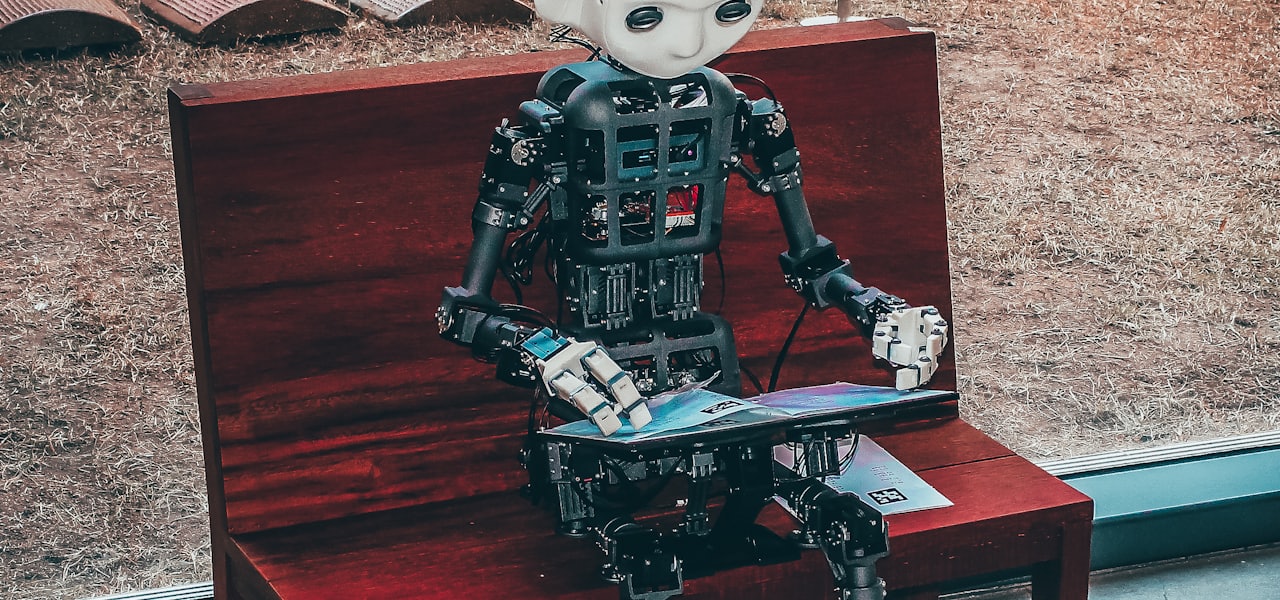
Vicarious was an artificial intelligence company based in the San Francisco Bay Area, California. They use the theorized computational principles of the brain to attempt to build software that can think and learn like a human. Vicarious describes its technology as "a turnkey robotics solution integrator using artificial intelligence to automate tasks too complex and versatile for traditional automations". Alphabet Inc acquired the company in 2022 for an undisclosed amount. == Founders == The company was founded in 2010 by D. Scott Phoenix and Dileep George. Before co-founding Vicarious, Phoenix was Entrepreneur in Residence at Founders Fund and CEO of Frogmetrics, a touchscreen analytics company he co-founded through the Y Combinator incubator program. Previously, George was Chief Technology Officer at Numenta, a company he co-founded with Jeff Hawkins and Donna Dubinsky while completing his PhD at Stanford University. == Funding == The company launched in February 2011 with funding from Founders Fund, Dustin Moskovitz, Adam D’Angelo (former Facebook CTO and co-founder of Quora), Felicis Ventures, and Palantir co-founder Joe Lonsdale. In August 2012, in its Series A round of funding, it raised an additional $15 million. The round was led by Good Ventures; Founders Fund, Open Field Capital and Zarco Investment Group also participated. The company received $40 million in its Series B round of funding. The round was led by individuals including Mark Zuckerberg, Elon Musk, and others. An additional undisclosed amount was later contributed by Amazon.com CEO Jeff Bezos, Yahoo! co-founder Jerry Yang, Skype co-founder Janus Friis and Salesforce.com CEO Marc Benioff. == Recursive Cortical Network == Vicarious is developing machine learning software based on the computational principles of the human brain. One such software is a vision system known as the Recursive Cortical Network (RCN), it is a generative graphical visual perception system that interprets the contents of photographs and videos in a manner similar to humans. The system is powered by a balanced approach that takes sensory data, mathematics, and biological plausibility into consideration. On October 22, 2013, beating CAPTCHA, Vicarious announced its model was reliably able to solve modern CAPTCHAs, with character recognition rates of 90% or better when trained on one style. However, Luis von Ahn, a pioneer of early CAPTCHA and founder of reCAPTCHA, expressed skepticism, stating: "It's hard for me to be impressed since I see these every few months." He pointed out that 50 similar claims to that of Vicarious had been made since 2003. Vicarious later published their findings in peer-reviewed journal Science. Vicarious has indicated that its AI was not specifically designed to complete CAPTCHAs and its success at the task is a product of its advanced vision system. Because Vicarious's algorithms are based on insights from the human brain, it is also able to recognize photographs, videos, and other visual data.
Microapp
A microapp is a super-specialized application designed to perform one task or use case with the only objective of doing it well. They follow the single responsibility principle, which states that "a class should have one and only one reason to change." Micro applications help developers create less complex applications while reducing costs by breaking down monolithic systems into groups of independent services acting as one system. A good example of Microapps would be https://docs.citrix.com/en-us/legacy-archive/downloads/microapps.pdfthat provide single purpose action from Salesforce and over 40 applications on its workspace. == Requirements and characteristics == Microapps usually are accessible on any device, display, or operating system without installation on the viewer's device. To qualify as a microapp, the entity must: be built and deployed as an independent software module bring together various media types into a single experience have advanced security and compliance features be functionally-extensible comply with granular data demands be agnostic single use case oriented Microapps differentiate from traditional web or mobile applications by how the end-user interacts with them. Consequently, they can be embedded in websites or viewed online to bypass app stores and are typically built to provide a focused experience to the user. == Usage == Microapps are typically used for commercial purposes to reduce development costs for projects not requiring the large scope of a traditional web or mobile application. In addition, they are often used to showcase in-depth information or enrich marketing material with interactivity. Lately, micro apps are being used to boost productivity by providing quick tools to people to reuse best practices. Users have been interacting with microapps for a while with suites like Microsoft 365 and Google Workspace, where each one of their end-user services could be considered as a microapp. All these microapps share a unique identity manager to provide a unified user experience. == Benefits == Replacing monolith systems with microapps provide several advantages like: Reduce complexity for developers and users. Smaller, more cohesive, and maintainable codebases Scalable organizations with decoupled, autonomous teams Allows for hyper-specialization Independent deployment Multi-stack == Cloud-native microapps == Technologies like Kubernetes, or OpenShift, allow companies to replace their monolith and legacy systems with modular software taking advantage of microapps on reducing costs and improve reliability and security. == Microapps vs. microservices == There is a widespread misunderstanding between these two concepts, which is the key difference. Microservices is an architectural style that is systems-centric, meaning it decouples the presentation and data layer using web services APIs. On the other side, micro apps behave more as a super-architecture style (that embraces microservices among other types), and it is user-centric, meaning they decouple the whole monolith system onto modules that are designed to interact with final users. Both architectural styles rely on modularity to provide high performance, scalability, and resilience. == Considerations == Developing Micro apps requires a different approach than traditional software, and user experience is crucial. The following considerations are essential for switching to microapps. To run multiple microapps is required a single identity management system. Microservices are well suited to make microapps more powerful Apps with different levels of maturity might create a non-unified user experience. Duplication of dependencies can create security issues and inefficiencies. Suitable for well-organized teams
Digistar
Digistar is the first computer graphics-based planetarium projection and content system. It was designed by Evans & Sutherland and released in 1983. The technology originally focused on accurate and high quality display of stars, including for the first time showing stars from points of view other than Earth's surface, travelling through the stars, and accurately showing celestial bodies from different times in the past and future. Beginning with the Digistar 3 the system now projects full-dome video. == Projector == Unlike modern full-dome systems, which use LCD, DLP, SXRD, or laser projection technology, the Digistar projection system was designed for projecting bright pinpoints of light representing stars. This was accomplished using a calligraphic display, a form of vector graphics, rather than raster graphics. The heart of the Digistar projector is a large cathode-ray tube (CRT). A phosphor plate is mounted atop the tube, and light is then dispersed by a large lens with a 160 degree field of view to cover the planetarium dome. The original lens bore the inscription: "August 1979 mfg. by Lincoln Optical Corp., L.A., CA for Evans and Sutherland Computer Corp., SLC, UT, Digital planetarium CRT projection lens, 43mm, f2.8, 160 degree field of view". The coordinates of the stars and wire-frame models to be displayed by the projector were stored in computer RAM in a display list. The display would read each set of coordinates in turn and drive the CRT's electron beam directly to those coordinates. If the electron beam was enabled while being moved a line would be painted on the phosphor plate. Otherwise, the electron beam would be enabled once at its destination and a star would be painted. Once all coordinates in the display list had been processed, the display would repeat from the top of the display list. Thus, the shorter the display list the more frequently the electron beam would refresh the charge on a given point on the phosphor plate, making the projection of the points brighter. In this way, the stars projected by Digistar were substantially brighter than could be achieved using a raster display, which has to touch every point on the phosphor plate before repeating. Likewise, the calligraphic technology allowed Digistar to have a darker black-level than full-dome projectors, since the portions of the phosphor plate representing dark sky were never hit by the electron beam. As it is only one tube, with no pixelated color filter screen, the Digistar projector is monochromatic. The Digistar projects a bright, phosphorescent green, though many (including both visitors and planetarians) report they cannot distinguish between this green and white. Additionally, unlike a raster display, the calligraphic display is not discretized into pixels, so the displayed stars were a more realistic single spot of light, without the blocky or ropy artifacts that are hard to avoid with raster graphics. Due to the use of vector graphics, as opposed to raster imaging, the Digistar does not have the resolution issues that many full-dome systems have. Thanks to this, and the brightness of the CRT, only one projector is needed to project on the entire dome, whereas most full-dome systems require up to six raster projectors, depending on dome size. The projector in the original Digistar was housed in a square pyramid-shaped sheathing. When powered on, the four sides at the tip of the pyramid would recede into the housing, exposing the lens and appearing as a cut-off pyramid. As Digistar II was being developed, many planetaria were sold Digistar LEA projectors. The LEA, called Digistar 1.5 by many users, was effectively a prototype of the D2 projector, compatible with Digistar and upgradable to Digistar II. There are no significant differences in performance between the LEA and the true D2. == History == Digistar was the brainchild of Stephen McAllister and Brent Watson, both of whom were long-time amateur astronomers and computer graphics engineers. In 1977, E&S had been consulting with Johnson Space Center regarding training simulators for astronauts. McAllister had been writing proof-of-concept software for this consultation and in summer 1977 entered the data for 400 bright stars and wrote the software to display them. Steve and Brent both originally saw the system's purpose as celestial navigation training. Brent, who had until recently worked at Hansen planetarium, asked his planetarium coworkers what they thought of a potential digital planetarium system, and then Steve and Brent both targeted the system toward planetaria. The primary goal of the planetarium system was to use computer graphics to overcome the limitation of traditional star ball technology that only allowed display of star fields from the point of view of Earth's surface. By using computer graphics the stars could be displayed from viewpoints in space, including simulating the appearance of space flight. Likewise, planets and moons within the Solar System could be displayed accurately for any time in history, from any point of view. The system used the location of real stars from the Yale Bright Star Catalogue, as well as random stars. A laboratory prototype of Digistar was used to generate the star fields and tactical displays in the 1982 science fiction film Star Trek II: The Wrath of Khan. Filming was done directly from the Digistar display in the lab. ILM projected the effort would take two weeks, but in fact it took from late November 1981 until mid-February 1982. The last shot recorded was what became the first entirely computer generated feature film sequence. It was the opening scene of the film, a rotating forward translation through a star field that lasted 3.5 minutes. It was recorded in one take, at a rate of one frame every 3.5 seconds, taking four hours for the shoot. The Digistar team members are credited in the film. After prototyping in labs at Evans and Sutherland the team repeatedly used Salt Lake City's Hansen planetarium to beta test the system at the planetarium at night. The Digistar team performed one week of shows at the planetarium as a fund raiser to benefit the planetarium. The company also later gave the planetarium an improved prototype Digistar to replace "Jake", the planetarium's aging Spitz planetarium projector. The first customer installation was to the newly constructed Universe Planetarium at the Science Museum of Virginia in 1983, the largest planetarium dome in the world at the time, for $595,000. By September 1986 there were four installed Digistars. Even at this point the long-term success of the product was very much in doubt, but as of 2019 Digistar has an installed base of over 550 planetaria. === Versions === Digistar (1983) Digistar II (1995) Digistar 3 (2002) Digistar 4 (2010?) Digistar 5 (2012) Digistar 6 (2016) Digistar 7 (2021) == Hardware == Digistar was driven by a VAX-11/780 minicomputer, with custom graphics hardware related to the E&S Picture System 2. Later versions of Digistar 1 used a DEC MicroVAX 2, driving a custom version of a PS/300. The original Digistar and Digistar 2 had a physical control panel that was used for running the star shows. This control panel was approximately 3' x 4' and contained a keyboard, a 6 DOF joystick, and a large array of back-lit buttons. One button that was used for moving the viewpoint forward in space was labeled "Boldly Go". Later iterations of Digistar replaced the physical control panel with a common graphical user interface. Digistar 3 was the first Digistar system to offer full-dome video in 2002, using six projectors. Digistar 4 was able to cover the dome using only two projectors. == System limitations == Though technologically advanced in its day, and the closest system to true full-dome video at the time of its release, the original Digistar and Digistar 2 are limited to only projecting dots and lines—meaning only wireframe models can be projected. To compensate for this, the projector is capable of defocusing specific models, blurring lines and dots together. An example of this is in the Digistar 2's built-in Milky Way model. The model is a circle of parallel lines that, when defocused, appear as the continuous band of the Milky Way across the sky. On more complex models, especially three-dimensional ones, brightness and details may be lost in this process, so it is not useful in all situations. The Digistar and Digistar 2 also suffer focus limitations. Because they use a single lens to cover the entire dome, it is difficult to gain perfect focus across the dome. Coupled with this, stars greater than a certain brightness are "multihit" points, meaning the projector draws two dots at the given position to accommodate the brightness of the star. Errors in the projector can lead the second dot to be slightly out-of-place with the first one. These two issues together, along with other issues that can occur within the projector's focus system, give the stars a blobby look. Some p
AltStore
AltStore is an alternative app store for the iOS and iPadOS[1] mobile operating systems, which allows users to download applications that are not available on the App Store, most commonly tweaked apps, jailbreak apps, and apps including paid apps on the app store. It was publicly announced on September 25, 2019, and launched on September 28. == History == Riley Testut is an American developer who began to work on AltStore after Apple declined to allow his Nintendo emulator Delta on the App Store. Since Xcode allowed him to temporarily install his Delta app to his iOS device for 7 days of testing, he created AltStore in 2019 to replicate this functionality, which could be extended to other .ipa files. As of 2022, AltStore had been downloaded 1.5 million times. In the following years, AltStore expanded beyond its initial sideloading functionality. The platform was founded by Testut, with Shane Gill later joining as co-founder. AltStore was initially supported through Patreon contributions from its user community, and later saw increased adoption following regulatory developments in the European Union that enabled broader third-party app distribution. The project has also been involved in notable industry collaborations, including a partnership with Epic Games. == Features == AltStore exploits a loophole in the Xcode developer platform, which allows developers to sideload their own apps which they are working on without needing to jailbreak. Sideloaded apps are signed like a developer project for testing and will expire after 7 days with a free account or one year with a paid developer account, by which they will need to be refreshed or reinstalled.